10 Best Dental Implant Screwdrivers for Global Buyers

Choosing among the 10 Best Dental Implant Screwdrivers for Global Buyers requires more than comparing prices. A screwdriver may look simple, yet its tip geometry, torque control, handle balance, and connection fit can influence clinical efficiency. Small mismatches may damage a screw head, delay treatment, or create unnecessary frustration beside the dental chair. That detail matters.

Dr. Carl E. Misch, a leading authority in implant dentistry, stated, β€œThe goal of implant dentistry is to restore the patient to normal function, esthetics, comfort, and speech.” Dental Implant Screwdrivers support that goal through controlled, repeatable handling during implant restoration procedures. The best options should match the implant system, driver interface, and recommended torque range. They should also withstand validated cleaning and sterilization processes without losing precision.

Global buyers face additional concerns. Product availability differs by region. So do documentation, warranty support, replacement access, and distributor reliability. A low-cost driver may appear attractive, but poor machining can cause wobble inside the screw recess. That is not a minor inconvenience. It can affect confidence, workflow, and component protection.

This guide compares practical choices for clinics, laboratories, and professional distributors. It considers universal and system-specific designs, manual and torque-compatible models, ergonomic grip patterns, corrosion resistance, and traceability. Some products may perform well in routine cases but feel limited in complex workflows. That difference deserves honest attention. No screwdriver is perfect for every implant platform. Careful verification remains essential before purchase.

10 Best Dental Implant Screwdrivers for Global Buyers

Dental Implant Screwdriver Basics: ISO 1797 Shanks and 10–35 Ncm Torque

Dental implant screwdriver selection starts with fit, not appearance. ISO 1797:2017 defines shank dimensions for rotary instruments, helping confirm compatibility with the handpiece or torque driver. However, an ISO 1797 shank does not guarantee a correct implant connection. The driver tip must match the screw head precisely. Even slight play can damage internal geometry during insertion or removal.

Torque matters more than many buying guides suggest. A 10–35 Ncm range covers common clinical adjustments, but the required value must come from the implant system’s instructions. ISO 6789:2017 provides a reference for torque-tool calibration and measurement performance. A driver reading 30 Ncm may not deliver exactly 30 Ncm without verification. That is the uncomfortable part. Calibration records matter.

A 2022 systematic review in Clinical Oral Implants Research linked accurate prosthetic torque control with reduced screw loosening risk, although clinical outcomes varied by design and loading conditions. WHO’s Global Oral Health Status Report 2022 estimates that oral diseases affect nearly 3.5 billion people worldwide, increasing demand for dependable implant maintenance tools. For global buyers, check shank dimensions, connection geometry, torque range, calibration interval, sterilization instructions, and readable markings. Test the driver before surgery. Small errors become expensive.

10 Best Dental Implant Screwdrivers for Global Buyers

Dental Implant Screwdriver Basics: ISO 1797 Shanks and 10–35 Ncm Torque

The chart presents common nominal torque checkpoints within the 10–35 Ncm range used when comparing manual and torque-controlled dental implant screwdrivers. ISO 1797 shank compatibility concerns the instrument connection geometry; common nominal shank diameters include 2.35 mm for handpiece and contra-angle shanks and 1.60 mm for friction-grip shanks. The correct driver interface and final torque must always follow the implant system’s instructions for use.

Comparing the 10 Best Tools: Drive Types, Tip Sizes, and Implant Fit

Choosing among the 10 best dental implant screwdrivers requires more than counting included tips. Global buyers should match each driver to the implant connection, not merely its appearance. Hex drivers suit many internal connections, while star-shaped or square interfaces require dedicated profiles. Manual handles provide tactile control during final seating. Torque-limiting models add measurable consistency when the procedure requires a defined value. Powered drivers save time, but their settings must be verified before clinical use.

Tip size affects access, stability, and control. Small tips can enter narrow posterior spaces, yet thin tips may flex under pressure. A precise fit matters. Loose engagement can round the screw head, contaminate the field, or delay restoration. Review compatibility charts, shaft length, torque range, and sterilization instructions for every tool. Some kits claim broad compatibility, but that wording should not replace implant-specific confirmation. No screwdriver is perfect, and an included tip may rarely be useful.

Tips: Keep short and long shafts available for different clinical angles. Inspect tips under bright light for flattening, cracks, or metal debris. Replace worn components early. Test torque accuracy according to the manufacturer’s instructions and local clinical requirements. If resistance feels unusual, stop rather than forcing the driver. An experienced dental professional should confirm the connection before use. This small check protects both the patient and the investment.

Sterilization and Safety: 134Β°C Autoclaving and ISO 17665 Compliance

10 Best Dental Implant Screwdrivers for Global Buyers

For global buyers, sterilization should rank beside tip accuracy and torque control. A screwdriver may fit an implant perfectly, yet fail under repeated steam exposure. Select instruments with corrosion-resistant materials, secure handles, and clearly documented reprocessing instructions. The best ten options should state whether they tolerate 134Β°C autoclaving, including exposure time, drying requirements, and maximum cycle limits.

ISO 17665 focuses on validated moist-heat sterilization processes, not a simple marketing label. Ask suppliers for process validation evidence, material data, and traceable instructions for use. A proper cycle requires saturated steam, controlled temperature, pressure, time, and effective drying. Wet instruments can develop stains, surface damage, or packaging failures. Small details matter.

Inspect the driver after every cycle. Look for pitting, loosened tips, damaged markings, and difficult movement. Do not ignore resistance. That is risky. Separate removable components only when the instructions permit it, then clean hidden joints carefully before sterilization. Torque accuracy should also be checked at defined intervals, because heat and mechanical wear may affect performance. One weakness remains common: buyers often trust β€œautoclavable” without confirming the exact cycle. A more reliable purchasing decision compares independent test records, production traceability, and real reprocessing limits. A screwdriver that survives one cycle is not proven durable. Repeated validation matters.

Global Purchasing Data: CE Documentation, Materials, and Warranty Terms

10 Best Dental Implant Screwdrivers for Global Buyers

Global buyers should request complete CE documentation before comparing prices. The file should include a Declaration of Conformity, product identification, intended use, and applicable European requirements. Ask whether the document covers the exact screwdriver model and supplied accessories. A generic certificate is not enough. Check the manufacturer’s quality-system evidence, risk information, and sterilization instructions. For markets outside Europe, verify local import and registration requirements separately. Rules can differ.

Material details affect service life and patient safety. Surgical-grade stainless steel offers strength and corrosion resistance, while titanium can reduce weight. The driver tip must match the implant system precisely. Even small dimensional errors may damage the screw head. Request surface-finish data, hardness information, and validated cleaning-cycle limits. Torque accuracy also deserves attention. Ask for calibration records and the recommended testing interval. Short documents often hide important limits.

Warranty terms should state coverage duration, replacement procedures, transport responsibility, and exclusions. Confirm whether repeated autoclave cycles affect coverage. Keep batch numbers and inspection records for traceability. A low-cost tool may become expensive after frequent tip wear. This is easy to underestimate. Buyers should also ask about spare parts and response times. One imperfect assumption is treating warranty length as quality proof; service access may matter more. Procurement teams should record every answer in writing.

10 Best Dental Implant Screwdrivers for Global Buyers - Global Purchasing Data: CE Documentation, Materials, and Warranty Terms
Rank Product Category Recommended Use Driver Interface Common Tip Sizes Main Materials Torque Compatibility Sterilization Capability CE Documentation to Request Typical Warranty Terms Global Purchasing Notes Buyer Rating
1 Manual hex implant screwdriver Routine placement and restorative screw tightening where a calibrated torque wrench is used separately Standard contra-angle or hand-driver shank Hex 0.9 mm, 1.0 mm, 1.2 mm, 1.25 mm, and 1.27 mm, depending on the implant system Medical-grade stainless steel; hardened driver tip Final torque must be applied with a compatible calibrated torque wrench; commonly used ranges are 15–35 NΒ·cm, system dependent Reusable; steam autoclave compatibility should be confirmed in the IFU EU Declaration of Conformity, MDR classification rationale, IFU, sterilization instructions, and material declaration Commonly 12 months against manufacturing defects; wear and misuse normally excluded Low-cost and easy to source; confirm exact hex geometry before ordering β˜…β˜…β˜…β˜…β˜…
2 Torque-wrench-compatible implant driver Controlled tightening of abutment and prosthetic screws ISO-compatible torque-wrench connection or manufacturer-specific connection Hex, square, or star profiles; size must match the implant screw head Stainless steel shaft with hardened stainless-steel tip Designed for use with a calibrated wrench; typical clinical settings range from 15–45 NΒ·cm according to the implant system Reusable and commonly steam-sterilizable when validated by the manufacturer EU Declaration of Conformity, IFU, validation of reprocessing, technical data sheet, and traceability information Usually 12–24 months; calibration of the separate torque wrench is not generally covered Best for clinics requiring repeatable torque control and documented workflows β˜…β˜…β˜…β˜…β˜…
3 Long-shank implant screwdriver Posterior restorations and access through deep or restricted surgical fields Handpiece shank or torque-wrench adapter Common hex sizes from 0.9 mm to 1.27 mm; length often 20–35 mm Medical-grade stainless steel; corrosion-resistant finish Use only within the torque limit specified for the compatible screw and driver Reusable; autoclave parameters must follow the supplied IFU Declaration of Conformity, IFU, cleaning and sterilization validation, and dimensional specification Typically 12 months for material and workmanship defects Useful for limited access, but longer shafts may flex under excessive force β˜…β˜…β˜…β˜…β˜†
4 Short-shank implant screwdriver Anterior restorations and procedures where precise tactile control is important Manual handle or compact torque-wrench connection Hex or star profile selected according to the prosthetic screw design Stainless steel shaft with an autoclavable polymer or metal handle Final tightening should be performed with a calibrated torque wrench when specified by the implant manufacturer Reusable; steam sterilization is common for metal instruments EU Declaration of Conformity, IFU, material safety information, and reprocessing instructions Commonly 12 months; cosmetic damage and normal tip wear may be excluded Compact format improves control and storage efficiency β˜…β˜…β˜…β˜…β˜†
5 Multi-system interchangeable driver kit Dental laboratories, distributors, and clinics handling multiple implant connections Replaceable tips with a universal handle or torque-wrench adapter Multiple hex, star, and square tips; verify each tip by connection and size Stainless steel tips; autoclavable stainless steel or high-temperature polymer case Torque depends on the selected tip and screw system; do not exceed the lowest rated component Tips are often reusable; case sterilization suitability varies by construction Declaration of Conformity covering the complete kit, IFU, component list, and sterilization validation Typically 12 months for the kit; individual tips may be treated as replaceable wear components Reduces inventory complexity but requires strict tip identification and segregation β˜…β˜…β˜…β˜…β˜†
6 Angled implant screwdriver Angulated access channels and restorations with difficult line-of-sight Angled head with compatible manual or torque-wrench connection Usually hex or star profiles; angle and clearance must match the restoration Medical-grade stainless steel; reinforced joint or fixed angled head Use only at the manufacturer-specified angle and torque; excessive angulation can damage the screw head Reusable only when the joint and reprocessing method are validated EU Declaration of Conformity, IFU, bending-load limitations, reprocessing instructions, and dimensional drawings Commonly 12 months; damage caused by lateral loading is normally excluded Improves access but usually costs more and requires careful inspection after sterilization β˜…β˜…β˜…β˜…β˜†
7 Laboratory implant screwdriver with ergonomic handle Bench work, framework adjustment, and prosthetic component assembly Manual handle with fixed or replaceable driver tip Hex and star tips selected for the laboratory’s implant portfolio Stainless steel tip with anodized aluminum, stainless steel, or autoclavable polymer handle Generally intended for hand tightening unless a torque-wrench interface is expressly provided May be reusable or limited to non-sterile laboratory use; confirm product labeling Declaration of Conformity when marketed as a medical device, material declaration, and cleaning instructions Typically 12 months; non-sterile laboratory products may have different terms Good handling comfort and low purchase cost; not automatically suitable for surgery β˜…β˜…β˜…β˜…β˜†
8 Micro implant screwdriver Small-diameter prosthetic screws and narrow restorative components Precision manual handle or small torque-wrench adapter Small hex or star profiles, often below 1.0 mm Fine-finished stainless steel with precision-machined tip Low-torque applications; exact torque must be taken from the compatible implant system documentation Reusable only when validated; small tips require careful inspection for deformation Declaration of Conformity, dimensional tolerance data, IFU, and validated cleaning and sterilization process Commonly 12 months; tip damage from cross-threading or overload is usually excluded High precision is important; keep separate from larger drivers to prevent mix-ups β˜…β˜…β˜…β˜…β˜†
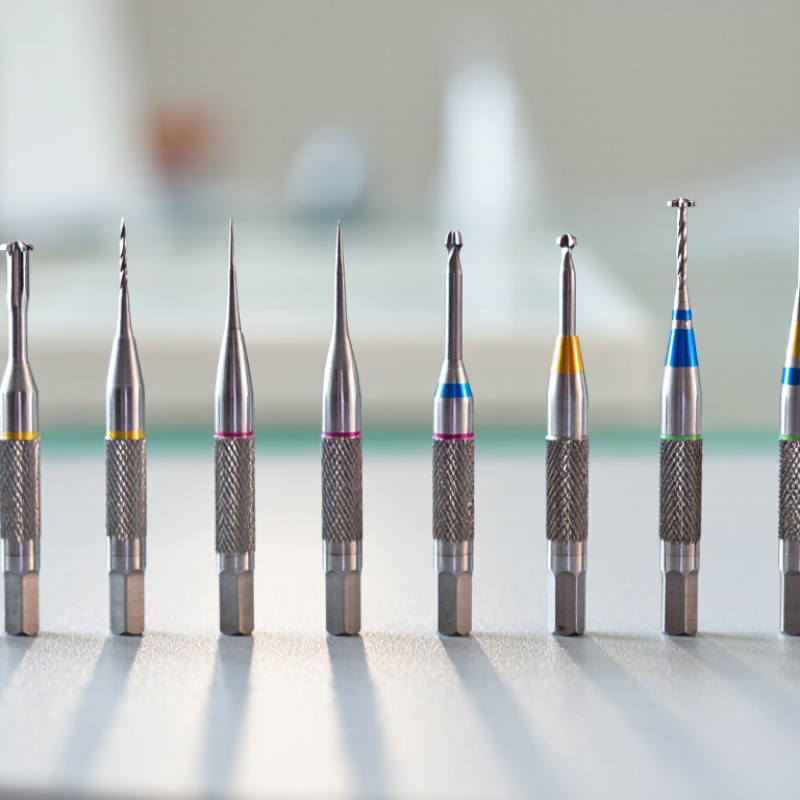
9 Color-coded implant driver set High-volume clinics and purchasing departments seeking faster instrument identification Manual, contra-angle, or torque-wrench-compatible formats depending on the set Multiple profile and size combinations identified by engraved or color markings Stainless steel drivers with medical-grade color coating or identification rings Torque limits are determined by the individual driver, screw, and compatible wrench Reusable if the coating and identification system are validated for steam sterilization Declaration of Conformity, IFU, color-code legend, sterilization validation, and component traceability Usually 12 months; coating wear may be excluded from warranty coverage Speeds selection and reduces errors, but markings must remain legible after repeated processing β˜…β˜…β˜…β˜…β˜†
10 Single-use sterile implant screwdriver Procedures requiring sterile, ready-to-use instruments or simplified reprocessing System-specific manual or torque-wrench connection Usually one specified hex or star profile per sterile pack Stainless steel driver with sterile barrier packaging Torque use must comply with the compatible implant system and the product label Single-use; do not reprocess or resterilize unless explicitly authorized by the manufacturer Declaration of Conformity, sterile-packaging validation, sterilization method, shelf life, IFU, and UDI information where applicable Replacement is normally limited to unopened, damaged, or defective packs before expiry Convenient for sterile workflows but has a higher per-procedure cost and more packaging waste β˜…β˜…β˜…β˜†β˜†
Purchasing note: Compatibility, torque values, sterilization limits, CE status, and warranty conditions vary by manufacturer and implant connection. Before purchase, request the current EU Declaration of Conformity, MDR classification, IFU, material specification, lot traceability details, shelf-life information where applicable, and written warranty terms. Never use a screwdriver size or torque value solely because it appears similar; verify it against the relevant implant system documentation.

Price-to-Performance Ranking: Accuracy, Service Life, and Lead Times

10 Best Dental Implant Screwdrivers for Global Buyers

Price-to-performance ranking should begin with accuracy, not the lowest purchase price. A well-machined driver should fit the implant screw head without rocking or slipping. In clinical handling, even slight movement can damage delicate edges. Look for stable torque transfer, clear size markings, and documented dimensional tolerances. Calibration records matter more than attractive packaging. A driver that maintains accuracy after repeated sterilization usually offers stronger long-term value. Still, real performance can vary between production batches.

Service life depends on material hardness, surface finishing, and cleaning routines. Stainless construction is common, but hardness alone does not guarantee durability. Check whether the handle remains firm after hundreds of cycles.

Inspect the tip under bright light for rounding, scratches, or corrosion. Replacement tips may reduce total ownership costs. However, some low-cost sets include difficult-to-source parts, creating unexpected delays.

Tips:

Ask suppliers for sample inspection reports, torque-test results, and sterilization guidance. Compare the quoted lead time with your actual purchasing schedule. A ten-day estimate may exclude production, customs, and local delivery. Request spare components with the initial order. Keep one unused driver for comparison during routine quality checks.

My practical mistake was judging value from unit price alone; freight and replacement parts changed the ranking considerably. For global buyers, responsive technical support can be worth more than a small discount.