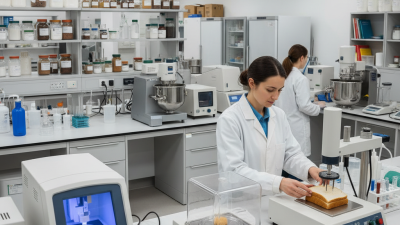
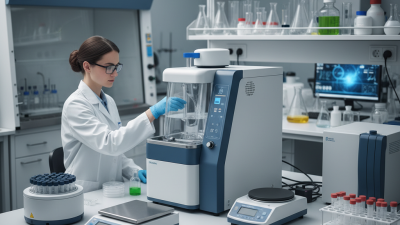
Choosing the best Food Laboratory Equipment in 2026 depends on what your laboratory tests, how often it works, and which results it must document. A small bakery lab may need a dependable pH meter, moisture analyzer, and calibrated thermometer. A larger testing facility may also rely on incubators, spectrophotometers, homogenizers, or chromatography systems. The right choice is rarely the most expensive one.
Start with the sample and the method. A balance that reads to 0.001 grams can help with precise formulation, while a water activity meter can reveal conditions that affect product stability. For temperature-sensitive work, check that an incubator holds its set point evenly—not just that its display looks reassuring. Ask suppliers about calibration, cleaning, training, service response, and replacement parts. Those details matter after installation.
Performance matters.
A strong equipment decision also considers throughput, staff experience, available bench space, and the records needed for consistent results. Compare instruments using documented specifications and, where practical, test representative samples before purchase. Confirm that operating procedures and maintenance schedules fit your team’s routine. A feature-rich system may add complexity without improving the measurements you actually need. That is easy to overlook.
This guide examines useful equipment categories, practical selection criteria, and common trade-offs for 2026. Recommendations should be treated as a starting point, not a substitute for method-specific evaluation or qualified technical advice. Even careful comparisons can miss something. The best setup is the one your laboratory can operate, verify, and maintain reliably.
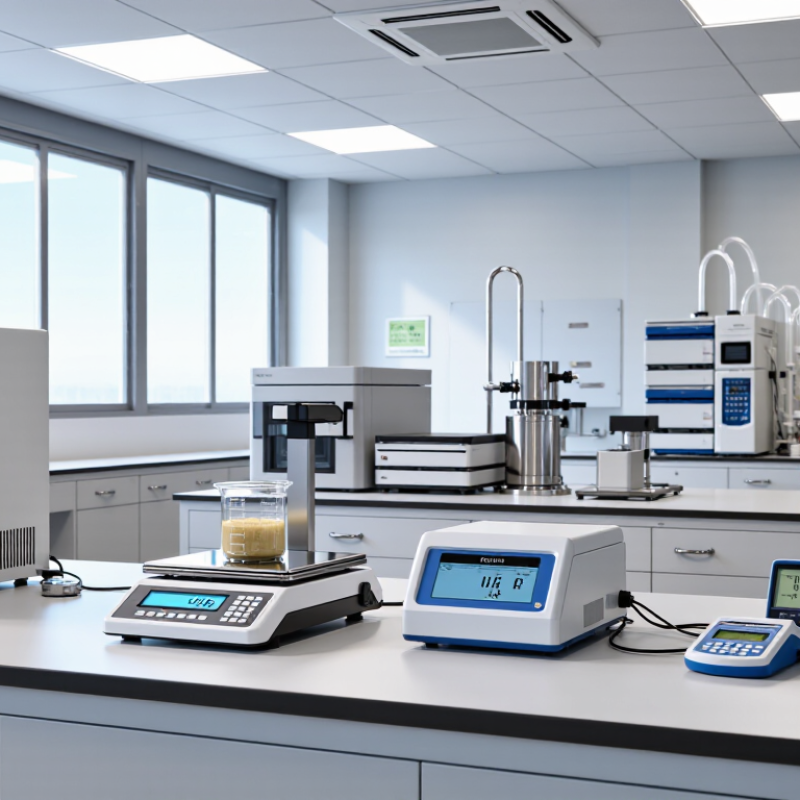
Food laboratory equipment turns a sample into measurable evidence. A calibrated balance records ingredient mass, while a pH meter checks acidity and a moisture analyzer estimates water content. These readings help teams compare batches and notice changes before products reach consumers. Small differences matter. A wetter sample may spoil sooner, while an unexpected pH reading can point to a process issue. Equipment supports decisions, but it does not make them automatically.
Temperature-controlled incubators and refrigerators keep samples under defined conditions during testing and storage. Thermometers and data loggers show whether those conditions stayed stable. Sieves, homogenizers, and sample containers help prepare consistent portions. That step is easy to underestimate. Poor sampling can make an accurate instrument tell the wrong story. Staff need documented methods and practical training in cleaning, handling, and operation.
Maintenance matters as much as purchase price. Calibration records, routine checks, and service logs help show whether results remain dependable. Instruments also have limits: a rapid moisture reading may need confirmation with a reference method. Busy labs can overlook that detail. The right equipment depends on the food, test, workload, and required accuracy, not simply the longest feature list. Even good systems leave some uncertainty, so results still need careful interpretation.
The best choice depends on the food matrix, target hazard, and required detection limit—not the longest feature list. WHO’s 2015 global burden estimate linked contaminated food to 600 million illnesses and 420,000 deaths annually. CDC’s 2011 estimates placed U.S. foodborne illnesses at about 48 million cases per year. These figures underline why a laboratory needs methods suited to its actual samples. A moisture analyzer for flour, for example, cannot answer a pathogen-testing question.
Compare instruments using validated methods, repeatability, sensitivity, sample throughput, and ease of cleaning. Ask for performance data on relevant food matrices, not only ideal reference samples. Check calibration requirements, consumable costs, service access, and whether results can be traced to operators and test batches. A fast instrument is not necessarily a reliable one. Even well-designed workflows can miss problems when staff training or sample preparation is inconsistent. That part is easy to underestimate.
Tips: Run a trial with representative samples before purchase. Record preparation time, failed runs, and cleaning steps. Ask staff to test the workflow, too. Their feedback may reveal practical snags that a specification sheet leaves out.
What Is the Best Food Laboratory Equipment in 2026?
Essential Instruments for Food Safety and Quality Analysis
The best laboratory setup depends on the food being tested and the risks being monitored. A calibrated analytical balance supports accurate formulation checks, while a moisture analyzer can reveal changes that affect texture and shelf stability. A pH meter helps track acidity in sauces, dairy products, and fermented foods. Small differences matter.
For routine safety work, incubators and suitable microbiological methods help laboratories detect and assess microbial contamination. ATP hygiene meters can provide quick checks on cleaned surfaces, but they are not pathogen tests. That distinction is easy to overlook. Where chemical residues or nutrients need detailed measurement, chromatography and spectrophotometry can provide useful data when methods are validated for the sample.
Equipment alone does not guarantee reliable results. Staff need documented procedures, regular calibration, clean sample handling, and controls that show when a test has gone wrong. A meter can drift. Even a careful analyst can mislabel a sample on a busy day. Choose instruments for the questions your laboratory must answer, and check that their detection limits, maintenance needs, and reporting functions fit those tasks. Clear records make results easier to review and reproduce.
Typical result times vary by method and workflow. This comparison shows indicative analysis-time ranges; sample preparation and any required enrichment are excluded.
How to interpret: ATP luminometers provide rapid hygiene checks but do not identify specific pathogens. Lateral-flow readers and real-time PCR systems support targeted testing, while culture-based workflows can take longer because organisms need time to grow. Actual turnaround depends on the test, sample, and laboratory protocol.
The best food laboratory equipment in 2026 depends on the question a laboratory must answer. Microbiology labs need suitable incubators, sterile sample-preparation tools, and validated detection systems. A chemistry lab testing nutrients or contaminants may prioritize chromatography, precise balances, and moisture analyzers. The details matter: a fatty sauce, dry cereal, and leafy greens behave differently during sample preparation. There is no universal setup.
The scale of foodborne illness makes reliable testing essential. The CDC’s 2011 U.S. estimate attributed about 48 million illnesses, 128,000 hospitalizations, and 3,000 deaths each year to foodborne disease. WHO’s 2015 global burden report estimated 600 million illnesses and 420,000 deaths annually. These figures describe different populations, but both underline why laboratories need methods and instruments matched to specific hazards. For routine pathogen screening, throughput and contamination control may matter more than buying the most advanced analyzer.
For chemical testing, select instruments around target compounds, detection limits, and sample volume—not impressive specifications alone. Sensory or shelf-life work may call for controlled temperature chambers and consistent measuring tools instead. Method validation, calibration, and trained operators remain necessary; a sophisticated instrument cannot rescue poor sampling. I would still leave room in the budget for maintenance and repeat testing. That part is easy to underestimate. A lab’s equipment list should grow from its test menu, workload, and validated methods, then be reviewed as those needs change.
| Laboratory application | Core equipment | What it is used for | Key selection considerations | Typical performance considerations |
|---|---|---|---|---|
| Microbiology and pathogen testing | Incubator, autoclave, biosafety cabinet, colony counter | Culturing microorganisms, preparing sterile media, handling samples, and enumerating colonies. | Match temperature control and chamber capacity to validated methods. Choose containment equipment based on the organisms and risk assessment; a clean bench is not a substitute for a biosafety cabinet. | Check temperature uniformity, recovery after door openings, sterilization cycle documentation, airflow certification, and suitability for the required culture conditions. |
| Chemical composition and quality control | Analytical balance, pH meter, titrator, spectrophotometer | Measuring sample mass, acidity, titratable components, color, and selected chemical analytes. | Select measurement range, readability, electrode type, wavelength range, and automation according to sample volume and the test method. | Confirm calibration support, traceable standards, repeatability, temperature compensation where relevant, and data export or audit-trail requirements. |
| Moisture and solids analysis | Moisture analyzer, drying oven, desiccator, analytical balance | Determining moisture content or dry matter in ingredients and finished products. | Consider sample type, expected moisture range, sample throughput, heating method, and whether the chosen method agrees with the applicable reference method. | Assess temperature stability, endpoint control, repeatability, sample-size limits, and potential loss of volatile compounds during heating. |
| Sample preparation and extraction | Laboratory homogenizer, grinder, centrifuge, vortex mixer | Reducing particle size, mixing samples, separating phases, and preparing portions for downstream analysis. | Choose contact materials compatible with the sample, process volume, rotor or vessel capacity, and cleaning or cross-contamination controls. | For centrifuges, compare relative centrifugal force rather than rpm alone; also check rotor compatibility, balancing requirements, and temperature control if needed. |
| Fat, protein, and fiber analysis | Extraction apparatus, digestion block, distillation unit, filtration equipment | Supporting standardized procedures for measuring selected nutritional components. | Base equipment choice on the required method, sample matrix, throughput, reagent handling, ventilation, and waste-management arrangements. | Check temperature control, process consistency, recovery, method compatibility, and the availability of appropriate controls and reference materials. |
| Thermal properties and product stability | Differential scanning calorimeter, texture analyzer, controlled-temperature chamber | Evaluating thermal transitions, texture, and product behavior under defined temperature or storage conditions. | Select test fixtures, force or temperature range, sample geometry, and environmental control to match the product and intended analysis. | Prioritize calibration, controlled test conditions, reproducible sample preparation, and software that records the parameters needed to interpret results. |
| Packaging and shelf-life testing | Seal-strength tester, leak tester, water-activity meter, environmental chamber | Checking package integrity and measuring factors related to product stability and shelf life. | Choose tests based on package format, failure modes, product characteristics, and the relevant test procedure. | Review test repeatability, fixture suitability, chamber uniformity, calibration options, and the ability to document test conditions and results. |
| Routine measurements across multiple applications | Pipettes, refrigerators, freezers, laboratory water system, data loggers | Supporting accurate liquid handling, sample and reagent storage, and monitoring of controlled conditions. | Consider required volume range, storage temperature needs, water quality requirements, workload, and ease of routine maintenance. | Plan for calibration or performance checks, temperature monitoring, maintenance records, and alarms or backup procedures where sample integrity depends on storage. |
Equipment suitability depends on the food matrix, validated test method, required throughput, facility controls, and applicable regulations. Verify specifications and method compatibility before purchase.
The best food laboratory equipment in 2026 is equipment that produces reliable results and fits the tests a lab actually performs. A moisture analyzer may help monitor drying, while a calibrated balance supports accurate ingredient measurements. Temperature probes, pH meters, water activity meters, and incubators serve different needs. There is no universal best setup. Small errors travel.
Calibration matters because a reading is only useful when its accuracy is understood. Labs should keep traceable calibration records, document acceptance limits, and check instruments at intervals suited to their use. A thermometer used daily near a critical process may need closer attention than a rarely used backup. Calibration alone is not enough. Staff also need clear procedures and training.
Compliance increasingly depends on dependable records, not just capable instruments. Connected sensors can log temperatures automatically, and laboratory software can flag overdue checks or unusual readings. These tools may reduce manual entry, but they do not guarantee good data. Someone still needs to review alerts, maintain access controls, and investigate gaps. A sensor placed beside a warm oven can mislead the team. Technology helps most when it supports sound sampling, practical workflows, and honest review. I would still question any system that promises effortless compliance; real labs are messier than dashboards suggest.
2106 N Glassell St, Orange, CA 92865
(714)-754-6669 | sale@site_be823a56-9df9-438e-acac-cd7d504ea0ad
Monday: 8:00 AM – 4:30 PM
Tuesday: 8:00 AM – 4:30 PM
Wednesday: 8:00 AM – 4:30 PM
Thursday: 8:00 AM – 4:30 PM
Friday: 8:00 AM – 4:30 PM