7 Best Rubber Dams for River Water Level Control?
Choosing a Rubber Dam For River Water Level Control requires more than comparing prices, heights, or fabric thickness. Each river behaves differently. Flow velocity, sediment load, bank stability, and seasonal flooding can change performance dramatically. A dam that works beside a quiet agricultural channel may struggle in a steep, debris-heavy river. Small details matter, too. Anchor bolts, access roads, inflation equipment, and emergency deflation systems all influence long-term reliability.
Hydraulic engineering expert Dr. Hubert Chanson offers a useful warning: “A river is never a static laboratory.” That principle guides this review of seven rubber dams designed for river water level control. We examine their operating methods, construction materials, maintenance demands, and practical limitations. We also consider fish passage, downstream flow, sediment movement, and safe inspection access. These factors are easy to overlook during early planning.
Real projects rarely match clean diagrams.
A suitable system should respond predictably when water rises, yet remain manageable during dry periods. Operators need clear monitoring procedures and trained maintenance teams. Site surveys should confirm foundation conditions before installation. Manufacturer claims alone are not enough. Independent hydraulic calculations and local engineering review remain valuable.
This guide is not a universal ranking. Some comparisons depend on incomplete public data. That weakness deserves attention. Instead, it provides a practical starting point for engineers, water managers, and project owners. The best Rubber Dam For River Water Level Control is not always the largest or most advanced. It is the system that fits the river, budget, operating skills, and safety responsibilities.
What Rubber Dams Are and How They Control River Water Levels
7 Best Rubber Dams for River Water Level Control?
What Rubber Dams Are and How They Control River Water Levels
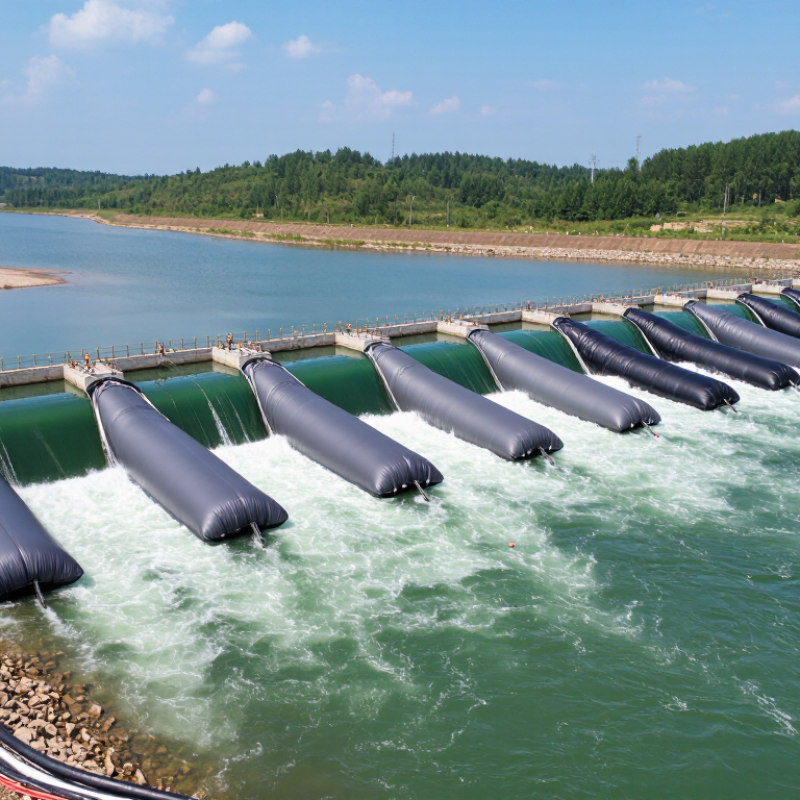
A rubber dam is a flexible, reinforced membrane anchored across a river channel. Operators inflate it with air or water, raising the crest and creating a temporary upstream pool. Deflation lowers the barrier, allowing flood flows, sediment, and fish passage to continue. The seven best systems usually share practical features: abrasion-resistant fabric, stable anchoring, backup power, automated sensors, accessible inspection points, reliable inflation equipment, and a clear emergency-release plan.
Water-level control depends on measured conditions, not guesswork. Sensors can track upstream level, downstream level, rainfall, and inflation pressure. The International Organization for Standardization’s ISO 21650 guidance emphasizes hydraulic safety and debris considerations for water-control structures. The World Meteorological Organization’s State of Global Water Resources 2023 reported abnormal river conditions across many monitored basins, showing why fixed operating settings can become unreliable. A rubber dam should therefore respond to changing discharge, not only to a calendar schedule.
Agriculture accounts for about 70% of global freshwater withdrawals, according to the UNESCO World Water Development Report 2024. That pressure makes controlled storage useful, especially during dry periods. Yet a rubber dam is not a set-and-forget solution. Sediment may collect near the upstream apron, while sharp debris can damage the membrane. Field teams should inspect seams, anchors, valves, and pressure records after major storms. The design may still fail if the channel capacity is underestimated. That uncomfortable possibility deserves more attention.
| Rubber Dam Configuration | Typical Crest Height | Typical Installed Length | Operating Principle | Typical Water-Level Control | Best-Suited River Application | Main Advantages | Important Design Considerations |
|---|---|---|---|---|---|---|---|
| Low-Head Fixed-Inflation Dam | 0.6–1.5 m | 10–50 m | An elastomeric membrane is inflated with air or water to raise the crest and deflated to lower it. | Usually provides approximately 0.3–1.2 m of adjustable upstream level control, subject to site hydraulics. | Small rivers, irrigation diversions, recreational reaches and low-head weirs. | Simple operation, relatively low obstruction when deflated, and fast seasonal adjustment. | Requires a stable foundation, reliable anchorage, debris management and protection against abrasion. |
| Adjustable Pool-Level Rubber Dam | 1.0–3.0 m | 20–100 m | Inflation pressure changes the effective crest elevation, allowing the operator to maintain a target upstream pool level. | Commonly controls a pool over a 0.5–2.5 m operating range, depending on the structural and hydraulic design. | Municipal water intakes, riverfront pools, navigation support and general level regulation. | Continuous or staged level adjustment with a relatively small footprint compared with a conventional gated structure. | Automatic controls should account for upstream level, downstream level, rainfall, river discharge and emergency deflation. |
| Inflatable Spillway Rubber Dam | 1.5–4.0 m | 30–150 m | The inflated body forms a flexible spillway crest; lowering the body increases discharge capacity during floods. | Maintains a normal pool during ordinary flows and can reduce the crest during high-flow events. | Medium-sized rivers, irrigation reservoirs and flood-sensitive diversion structures. | Large effective opening after deflation and reduced need for mechanical gates in the active spillway zone. | High-flow stability, uplift, scour, hydraulic jump location and downstream energy dissipation require detailed design. |
| Water-Inflated Rubber Dam | 0.8–2.5 m | 15–80 m | Water pumped into the membrane provides ballast and pressure; controlled drainage lowers the dam. | Typically provides approximately 0.5–2.0 m of adjustable upstream level control. | Sites where compressed-air equipment is undesirable or where a water-based operating system is practical. | Stable operating mass, relatively quiet operation and no requirement for a large air compressor during normal operation. | Needs clean operating water, pumps, valves, freeze protection where applicable and measures to prevent sediment blockage. |
| Air-Inflated Rubber Dam | 0.6–3.0 m | 10–100 m | Compressed air changes internal pressure and raises or lowers the flexible crest quickly. | Often allows rapid adjustment within a designed operating envelope, commonly about 0.3–2.5 m of level change. | Urban rivers, flood-control channels and locations requiring frequent or automatic adjustment. | Fast response, clean operating system and convenient integration with level sensors and remote controls. | Air-pressure monitoring, compressor redundancy, airtight valves and protection from puncture or sharp debris are essential. |
| Fish-Passage-Friendly Low-Head Dam | 0.3–1.0 m | 15–60 m | A low inflatable crest regulates water level while maintaining a smaller head difference; a separate bypass or fish passage may also be incorporated. | Generally provides modest pool-level control, often within approximately 0.2–0.8 m. | Streams and rivers where aquatic connectivity, habitat continuity and low upstream inundation are priorities. | Lower barrier height, reduced visual impact and easier compatibility with fish-passage measures than taller barriers. | Fish passage cannot be assumed solely from a low crest; velocity, turbulence, temperature, sediment transport and migration seasons must be assessed. |
| Tidal or Saltwater-Exposure Rubber Dam | 1.0–3.0 m | 20–120 m | A reinforced membrane adjusts the crest to retain freshwater during normal conditions and lower the barrier for high flows or tidal exchange. | Usually manages approximately 0.5–2.0 m of level difference, subject to tidal range and river discharge. | Lower river reaches, estuaries and freshwater-storage areas exposed to occasional saline or brackish water. | Flexible operation and reduced obstruction when lowered, with potential to limit saltwater intrusion in suitable locations. | Membrane compatibility, corrosion-resistant anchors and fittings, salinity, wave action, scour and tidal hydraulics require specialist review. |