10 Best Small Laboratory Incubators for Global Buyers?

Choosing a Small Laboratory Incubator can look simple until temperature stability, chamber size, and service access matter. For global buyers, the right model depends on application, location, voltage, and daily workload. A unit for bacterial culture may not suit cell work, seed testing, or routine microbiology. This guide examines ten compact incubators through practical purchasing questions, rather than attractive specifications alone.

Our review focuses on controllability, temperature uniformity, recovery after door opening, energy use, cleaning, and documentation. We consider whether controls remain readable with gloved hands. Shelf adjustment also matters during busy laboratory shifts. A 20-liter chamber may suit a small clinic, while a 150-liter model offers greater batch flexibility. However, larger capacity can waste energy when half empty. These small details matter when doors open repeatedly and samples arrive unexpectedly.

The comparison uses manufacturer data, technical manuals, user-focused research, and practical laboratory experience. Buyers should confirm local electrical standards, warranty coverage, calibration support, and replacement parts before ordering. No ranking is universally correct. Some claims require independent verification, especially temperature uniformity and long-term reliability. A few product descriptions may also omit inconvenient operating details. That is worth questioning. The selected models represent useful options, not perfect answers. Consider your protocol, budget, facility conditions, and support network carefully. A measured choice protects samples and reduces avoidable downtime.
10 Best Small Laboratory Incubators for Global Buyers?

What Is a Small Laboratory Incubator?

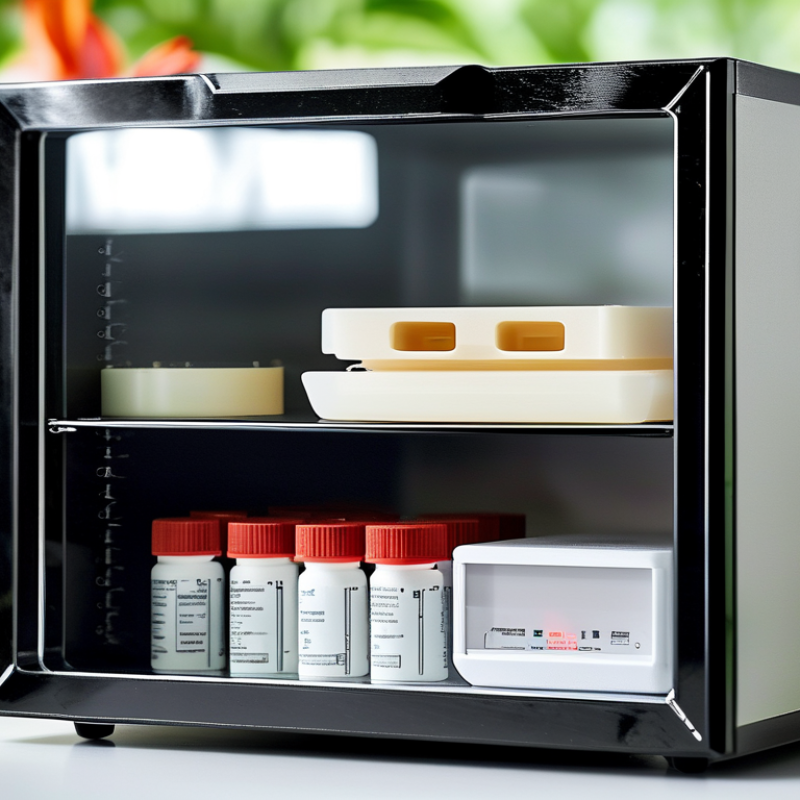
A small laboratory incubator is an enclosed chamber that maintains controlled conditions for biological or chemical samples. It usually regulates temperature, and some models also control humidity, carbon dioxide, or oxygen levels. Compared with a full-size unit, it occupies less bench space and supports smaller sample volumes. A typical chamber may hold culture plates, tubes, small flasks, or compact test containers.

In daily laboratory work, stable temperature matters more than appearance. A clear door helps users inspect samples without opening the chamber repeatedly. Digital sensors show internal conditions, while alarms can warn about temperature changes. However, a compact design does not guarantee uniform heating. I have seen warm and cool areas appear when shelves were overloaded or airflow was blocked. Careful placement is essential.

Before choosing an incubator, buyers should check its working temperature range, internal capacity, recovery time, and sensor accuracy. Ask for calibration information. Also examine cleaning access, shelf adjustment, power requirements, and noise levels. A unit designed for routine cell culture may not suit moisture-sensitive testing. This distinction is easy to overlook. Regular temperature checks with an independent reference device can reveal problems early. Even then, one reading may not represent the entire chamber, so mapping several positions gives more dependable evidence.

10 Best Small Laboratory Incubators for Global Buyers

What Is a Small Laboratory Incubator?

A small laboratory incubator is a compact temperature-controlled chamber used to grow, preserve, or test biological samples under stable conditions. The chart compares representative incubation temperatures for ten common laboratory applications. Actual requirements may vary by protocol, organism, and sample type.

Temperature values are commonly used setpoints in laboratory protocols and are provided for general buyer guidance rather than as brand-specific specifications.

Which Features Matter When Comparing Incubators?

When comparing small laboratory incubators, temperature stability should come before appearance or advertised capacity. A reliable unit should maintain the set temperature across shelves, not only near the sensor. Ask for uniformity data, recovery time, and calibration records. A warm door handle and a crowded lower shelf can reveal weaknesses during daily use.

The right features depend on the application. Biological cultures may require CO2 control, humidity management, and gentle airflow. A clear inner door helps users inspect samples without disturbing conditions. Independent alarms should warn about temperature drift, power failure, or an open door. Data logging is valuable when results must be reviewed later. Still, software can become useless if exporting records is difficult.

I once focused too heavily on chamber volume. That was a mistake. A smaller chamber with accurate control may outperform a larger, poorly insulated model. Check shelf adjustment, cleaning access, gasket quality, and noise levels. Stainless steel surfaces are practical, but sharp corners can slow cleaning. Global buyers should also verify local voltage, plug compatibility, language options, spare parts, and service response times. Request test reports from recognized laboratories when possible. Claims need evidence. A useful comparison table should record temperature range, stability, uniformity, recovery, alarm functions, power use, and warranty terms. Leave space for uncertainty; laboratory conditions rarely match showroom demonstrations.

Ten Small Laboratory Incubators for Global Buyers

Ten Small Laboratory Incubators for Global Buyers should be selected by application, not cabinet size. In routine bench work, stable temperature matters more than a polished display. Buyers should compare chamber volume, recovery time, temperature uniformity, sensor calibration, power demand, and local service access. A small footprint can still hide poor airflow. That detail is easy to miss.

The ten practical options include compact general-purpose incubators for routine sample holding. Refrigerated incubators support low-temperature studies and storage tests. CO2 incubators suit controlled cell culture work. Shaking incubators provide mixing during microbial or biochemical procedures. Dry-air heating incubators offer straightforward temperature control. Humidity-controlled units help protect moisture-sensitive samples. Photoperiod incubators support plant and environmental studies. Programmable incubators manage repeated temperature cycles. Portable incubators assist field teams with limited bench space. Sterilization-capable models reduce contamination concerns between runs.

Global buyers should verify voltage, plug compatibility, language support, and regional electrical certification. Ask for calibration records, validation procedures, and replacement-part availability. Door seals deserve attention, especially after frequent opening. A damaged seal can quietly increase temperature fluctuation. Noise and heat output also matter in small laboratories. In practical evaluations, the most expensive option is not always the most reliable. I would question any specification without test conditions. A better decision comes from matching the incubator’s controls to the actual protocol, even when that reveals an inconvenient limitation.

10 Best Small Laboratory Incubators for Global Buyers? - Ten Small Laboratory Incubators for Global Buyers

No. Incubator Type Typical Capacity Temperature Range Temperature Stability Air Circulation Interior Construction Common Safety Features Typical Power Supply Best Suited For
1 Compact Natural-Convection Incubator A 20 L Ambient +5°C to 60°C ±0.5°C Natural convection Powder-coated steel exterior; stainless-steel chamber Over-temperature cut-off; door gasket; visual alarm 220–240 V, 50/60 Hz; approximately 200 W Routine microbiology and small sample batches
2 Compact Natural-Convection Incubator B 30 L Ambient +5°C to 70°C ±0.5°C Natural convection Insulated metal cabinet; stainless-steel working chamber Independent safety thermostat; overheat protection 100–120 V or 220–240 V; approximately 250 W Teaching laboratories and general culture work
3 Small Forced-Air Incubator A 45 L Ambient +5°C to 70°C ±0.3°C Fan-assisted circulation Stainless-steel chamber with removable shelves Over-temperature limiter; audible and visual alarms 220–240 V, 50/60 Hz; approximately 350 W Applications requiring faster temperature recovery
4 Small Forced-Air Incubator B 55 L Ambient +5°C to 80°C ±0.3°C Horizontal fan circulation Stainless-steel interior; double-pane viewing door Independent thermal protection; power-failure recovery display 100–120 V or 220–240 V; approximately 450 W Environmental testing and sample conditioning
5 Benchtop CO₂ Incubator A 24 L Ambient +5°C to 60°C ±0.2°C Natural or gentle fan-assisted circulation Stainless-steel chamber; heated inner door CO₂ deviation alarm; over-temperature protection; door alarm 220–240 V, 50/60 Hz; approximately 500 W Cell culture with limited bench space
6 Benchtop CO₂ Incubator B 50 L Ambient +5°C to 60°C ±0.2°C Fan-assisted circulation Corrosion-resistant stainless-steel interior Temperature and CO₂ alarms; door-open warning; independent safety thermostat 100–120 V or 220–240 V; approximately 650 W Mammalian cell culture and tissue culture workflows
7 Small Refrigerated Incubator A 30 L 10°C to 60°C ±0.5°C Fan-assisted circulation Insulated cabinet; stainless-steel or coated-metal chamber Compressor protection; high/low temperature alarm; overheat cut-off 220–240 V, 50/60 Hz; approximately 500 W Low-temperature incubation and biochemical testing
8 Small Refrigerated Incubator B 65 L 5°C to 60°C ±0.5°C Forced-air circulation Insulated stainless-steel chamber; adjustable shelving Compressor delay; temperature alarm; door-open alarm 100–120 V or 220–240 V; approximately 700 W Food, water, soil, and pharmaceutical stability tests
9 Low-Temperature Microbiology Incubator 40 L 15°C to 50°C ±0.3°C Gentle forced-air circulation Stainless-steel interior with insulated outer housing Over-temperature protection; calibration offset; alarm relay option 220–240 V, 50/60 Hz; approximately 400 W Yeast, fungi, microbial enumeration, and culture preservation
10 Compact Programmable Incubator 80 L Ambient +5°C to 70°C ±0.3°C Forced-air circulation Stainless-steel chamber; insulated double-wall construction Programmable over-temperature limit; alarm history; door alarm 100–120 V or 220–240 V; approximately 800 W Multi-step protocols and laboratories needing repeatable cycles

Specification values are representative ranges for compact laboratory incubators. Actual performance may vary with ambient temperature, loading pattern, calibration, voltage, and configuration. Buyers should confirm validated specifications, certifications, plug type, and local electrical requirements before purchase.

How to Evaluate Safety, Efficiency, and Compliance

For global buyers, a small laboratory incubator should be judged by controlled performance, not appearance. Check temperature uniformity, recovery time, alarm visibility, and insulation quality. A door opening should not cause a long temperature drift. Ask for mapping data from several shelf positions, not only the center. WHO’s Laboratory Biosafety Manual, 4th edition, places risk assessment before equipment selection. That means the chamber must match the organism, process, and facility controls.

Safety details are easy to overlook. Look for over-temperature protection, independent monitoring, door-open alarms, and materials that tolerate routine disinfection. A clear external display helps staff notice a fault before samples are affected. Small details matter. The U.S. Department of Energy reports that laboratory buildings may use five to ten times more energy per square foot than offices. Buyers should therefore compare power consumption, standby behavior, and heat released into the room. A compact unit can still increase cooling demand.

Compliance requires evidence, not marketing language. Request electrical safety documentation aligned with IEC 61010-1, calibration records traceable to recognized standards, and quality documentation supporting ISO/IEC 17025 testing where applicable. For regulated workflows, review data integrity, service intervals, and spare-part availability across the destination country. Some suppliers provide impressive certificates but weak maintenance support. That is a practical warning. I would also test the incubator after transport, because vibration, voltage variation, and warm climates can expose weaknesses missed during factory testing.

How to Choose, Purchase, and Maintain the Right Model

10 Best Small Laboratory Incubators for Global Buyers

Choosing, purchasing, and maintaining a small laboratory incubator requires more than comparing prices. Define the required temperature range, chamber volume, sample type, and daily workload. A 20-liter unit may suit culture plates, while larger samples need better internal spacing. Check temperature uniformity, recovery time after door opening, and the accuracy of the built-in display. Independent calibration records are valuable evidence. Look for adjustable shelves, clear manuals, low noise, and suitable power specifications for your country.

Before purchasing, confirm voltage, plug type, delivery conditions, warranty coverage, and local technical support. Ask for test reports, calibration procedures, and replacement-part availability. Some sellers describe stability without explaining testing conditions. That deserves caution. A cheaper model can become expensive when shipping, import fees, or delayed repairs are added. I would also inspect the door seal, hinge strength, alarm functions, and data-recording options. No model is perfect. Your risk assessment matters more than attractive specifications.

Tips: Place the incubator on a level, ventilated surface. Avoid direct sunlight and nearby heat sources. Clean spills promptly with approved, non-corrosive solutions. Verify temperature with a calibrated external thermometer at regular intervals. Record cleaning, calibration, alarms, and repairs in a simple log. Do not overload shelves, because blocked airflow can create uneven conditions. If readings drift, stop relying on assumptions and investigate the sensor, seal, and environment. Maintenance often reveals problems early.