2026 How to Choose the Best Medical Laboratory Products for Your Needs?
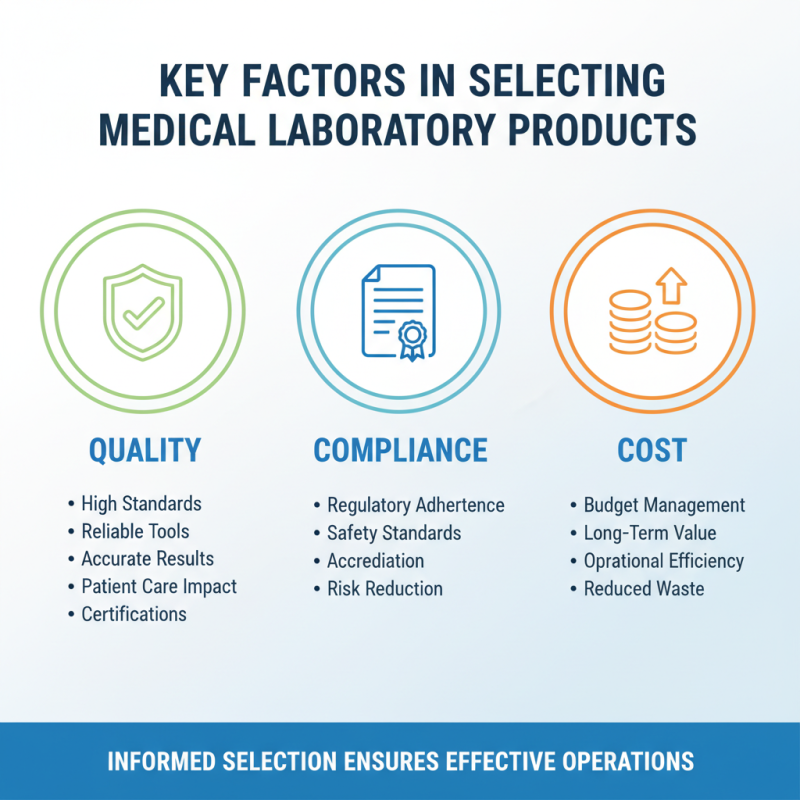
Choosing the right medical laboratory products is crucial for effective diagnostics and research. The vast array of options can be overwhelming, and making the wrong choice may lead to significant setbacks. Each product plays a vital role in laboratory efficiency and accuracy.
Understanding your specific needs is essential. Do you require advanced equipment or basic supplies? Each laboratory has unique requirements based on its focus and workload. Consulting with experts can provide guidance, but not every recommendation may suit your situation.
Reliable suppliers are key to obtaining quality medical laboratory products. Research their reputation and check reviews. This process can be tedious, yet it ensures that your lab functions smoothly. Remember that the best products often come with a balance of quality and cost-effectiveness. Thoughtful consideration today will pay off in better research results tomorrow.
Understanding Your Medical Laboratory Requirements: A Step-by-Step Guide
When selecting medical laboratory products, understanding your specific needs is essential. Begin by assessing the type of tests your lab conducts regularly. Are you focused on blood analysis, microbiology, or molecular diagnostics? Knowing the primary function will help narrow down your product options.
Consider the space and layout of your laboratory. Equipment must fit within your workspace while allowing for efficient workflow. Space constraints may limit the size and volume of your products. Make a list of must-have items versus those that would be nice to have. This prioritization is key.
Tips: Always ask for product demos. Seeing how equipment functions can help make informed choices. Consult with experienced colleagues to gain their insights. Their hands-on experience can provide valuable information that online research may overlook. Finally, weigh the cost against the benefits. Sometimes, a higher upfront cost can lead to greater accuracy and reliability in the long run.
2026 How to Choose the Best Medical Laboratory Products for Your Needs?
| Product Type |
Specifications |
Use Case |
Price Range |
Supplier Support |
| Microscope |
10x to 1000x magnification |
Cell analysis |
$200 - $3000 |
Yes |
| PCR Machine |
Standard and real-time PCR |
DNA amplification |
$1500 - $10000 |
Yes |
| Centrifuge |
Up to 15000 RPM |
Sample separation |
$300 - $5000 |
Yes |
| Autoclave |
Class B autoclave |
Sterilization |
$1000 - $6000 |
Yes |
| Blood Analyzer |
Complete blood count |
Routine blood testing |
$500 - $15000 |
Yes |
Evaluating Supplier Credentials: Importance of Certification and Accreditation
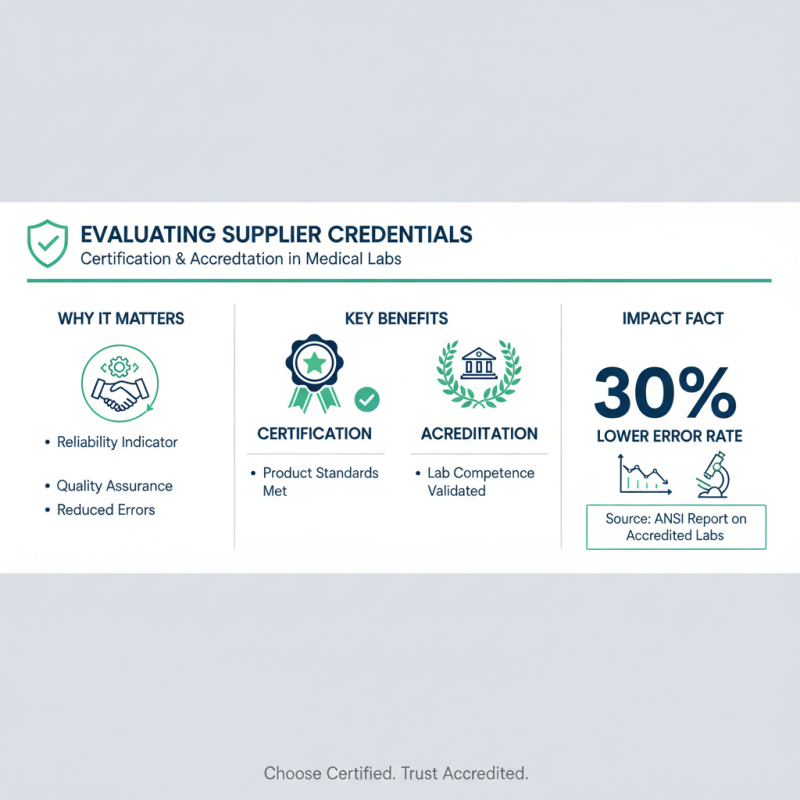
When selecting medical laboratory products, evaluating supplier credentials is essential. Certification and accreditation serve as key indicators of a supplier’s reliability. A report from the American National Standards Institute (ANSI) states that labs with proper accreditation have a 30% lower error rate in test results. This statistic highlights the importance of choosing accredited suppliers for quality assurance.
Accreditation ensures that the supplier meets specific industry standards. An ISO 13485 certification, for example, indicates compliance with international regulations. It reflects a commitment to quality management systems. However, not all certifications are equal. Some may be outdated or relevant only in certain regions. A lack of transparency in a supplier’s accreditation can also raise concerns.
Consider verifying the authenticity of certifications. Many organizations offer online verification tools. This can save time and eliminate potential risks. Moreover, the process of evaluating suppliers should be continuous. Regular assessments help maintain high standards. Be aware that a well-accredited supplier may charge higher prices. Yes, quality comes at a cost. But the investment can lead to more reliable results in the long run.
Comparative Analysis of Medical Laboratory Equipment: Performance Metrics and Reviews
When selecting medical laboratory equipment, performance metrics play a crucial role. Metrics like accuracy, precision, and speed determine the effectiveness of equipment. For instance, a hematology analyzer with high throughput can significantly enhance workflow efficiency in busy labs. However, precision isn't always guaranteed. Regular maintenance and calibration are necessary to ensure that these machines provide reliable results.
Reviews from professionals offer valuable insights into product performance. User experiences can highlight issues that manufacturers may overlook. Some devices might excel in usability but fall short in long-term reliability. It's essential to read a variety of reviews to get a balanced view. While one user might rave about a feature, another may note recurring malfunctions.
Cost is another factor to consider. A higher price doesn’t always mean better quality. Evaluating long-term value against initial investment is crucial. Budget constraints can limit options, but investing in the right equipment is vital for maintaining quality. Reflection on each decision will ultimately point to the best choices for your laboratory's unique needs.
Future Trends in Medical Laboratory Products: Innovations and Technologies to Watch
In the ever-evolving field of medical laboratory products, several trends are shaping the landscape.
Automation continues to rise, enhancing accuracy and efficiency.
Robotic systems streamline sample handling and processing, reducing human error. This shift allows technicians to focus more on analysis rather than routine tasks. Innovations in this area are impressive, but they also raise questions about reliability and dependability.
Another key trend is the integration of artificial intelligence (AI) into laboratory diagnostics.
AI algorithms can analyze complex data sets quickly, offering insights that might escape human analysis.
However, the challenge lies in ensuring that these systems are thoroughly validated. Clinical relevance must not be compromised for speed.
Transitioning to AI-driven diagnostics can necessitate significant training and adjustment for laboratory staff.
Moreover, point-of-care testing is becoming increasingly popular.
These portable devices enable rapid results in diverse settings, from hospitals to remote locations.
The convenience is undeniable, yet concerns about the accuracy of these tests linger.
Regular validation remains essential to maintain trust in the results.
As laboratories explore these innovations, balancing advancement with thorough evaluation is crucial to ensure exceptional patient care.