Choosing the right Leather Recliner Sofa Set involves more than matching color with a living room. It requires careful attention to leather quality, frame construction, reclining mechanisms, comfort, room dimensions, and after-sales support. Grand View Research estimates that the global home furniture market exceeded $500 billion in 2023, with continued growth expected through 2030. That scale reflects strong demand, but it also creates confusing choices and inconsistent product claims.
Comfort is personal. A sofa that feels supportive for one person may feel too firm for another. Before buying, measure the wall, doorway, elevator, and fully extended footrest area. Check whether the seat supports your lower back and whether the headrest aligns naturally with your neck. Genuine leather may develop a richer surface over time, but corrected leather and bonded materials can look similar in online photographs. The Leather Naturally organization notes that leather performance depends on hide quality, finishing, and maintenance, not simply the word “leather.”
Reliable evaluation also means examining the internal structure. Look for kiln-dried hardwood or reinforced metal frames, smooth reclining movement, accessible electrical components, and clearly stated weight limits. Industry testing standards, including BIFMA durability principles, can provide useful reference points, although residential sofas may not carry identical certifications. Warranty length matters, but warranty coverage matters more.
No guide is perfect. A showroom test may not reveal long-term cushion compression or motor noise. That is why this article compares materials, mechanisms, dimensions, certifications, maintenance needs, and verified customer experiences. The goal is not the cheapest set. It is a Leather Recliner Sofa Set that remains comfortable, serviceable, and suitable for real daily use.
Choosing a leather recliner sofa set starts with measuring your room, not browsing upholstery colors. The 2023 American Community Survey reports an average U.S. household size of about 2.5 people. That figure is useful, but it is not a seating rule. A couple may need three seats for guests, pets, or quiet separation.
Measure wall length, doorway width, stair turns, and walking clearance. Leave at least 30 inches for a main walkway. Reclining seats need more depth than standard sofas, often extending 10 to 20 inches when open. Mark the fully reclined footprint with painter’s tape. It looks excessive. It prevents expensive mistakes.
The U.S. Bureau of Labor Statistics’ 2023 American Time Use Survey found that adults spent roughly 5.3 hours daily on leisure and sports. A sofa used for that long needs practical support, not only attractive leather. Choose firm lumbar cushioning for reading and softer padding for extended viewing. Check whether every recliner can open without blocking a table or doorway.
Count regular users honestly. Three seats may fit the room, yet two powered recliners could serve better if comfort matters most. Measure your body, too. Your knees should bend naturally, and your feet should rest on the footrest. I sometimes overestimate “guest seating.” That assumption deserves review. A compact two-seat set can feel more useful than a crowded three-seat arrangement.
Define your space, seating needs, and the maximum sofa-set width that keeps the room comfortable and functional.
Planning guide: measure the usable seating area rather than the entire room. Leave approximately 75–90 cm of circulation space in front of the recliners, and allow extra clearance behind wall-hugger or fully reclining seats according to the product specifications. A compact room generally suits a two-seat set, while medium and large rooms can accommodate three- to five-seat configurations.
Choosing a leather recliner sofa set starts with the leather, not the color. Full-grain leather keeps natural grain and develops character. Top-grain leather feels smoother after surface correction. Split leather costs less but may wear faster. Bonded leather contains leather fibers and synthetic materials, so ask for its exact composition. According to a 2024 Grand View Research furniture market analysis, buyers increasingly value durability and material transparency. That matches showroom experience: vague labels often hide important differences.
Upholstery quality needs closer inspection. Check the back, armrests, and seat edges for consistent grain and tight stitching. Ask about leather thickness, protective coatings, foam density, and suspension design. A high abrasion score helps, but it is not the whole story. ASTM abrasion methods measure surface wear under controlled conditions, not years of reclining. The frame matters just as much. Look for kiln-dried hardwood, reinforced corners, and joints that are glued and screwed. BIFMA X5.4-2020 includes repeated-load and durability testing for seating, so request test documentation when available. Many buyers forget the mechanism.
Tips: Sit fully back and operate every recliner. Listen for clicks, scraping, or uneven movement. Press the frame near each arm. Excessive flex suggests weak support. Inspect the underside, too. I once trusted a polished showroom label and ignored a loose seam. That was a costly lesson. Claims should be verified, not admired.
Use this comparison to evaluate the material, upholstery workmanship, and structural quality of a leather recliner sofa set. Durability and comfort depend on usage, climate, maintenance, and the quality of individual components.
| Evaluation Area | Option or Specification | What It Means | Durability for Residential Use | Comfort and Appearance | Maintenance | Relative Value | Recommended For |
|---|---|---|---|---|---|---|---|
| Leather Type | Full-grain leather | Uses the outer surface of the hide with the natural grain largely intact. Natural markings may remain visible. | Very high Develops a patina and can remain attractive for many years when properly maintained. | Rich, breathable, and naturally textured; usually becomes softer with use. | Dust regularly and apply a suitable leather conditioner occasionally. Keep away from direct heat and strong sunlight. | Premium | High-use living rooms, long-term ownership, and buyers who prefer natural character. |
| Leather Type | Top-grain leather | Made from the upper layer of the hide, usually lightly sanded or finished for a more uniform appearance. | High Generally offers a strong balance of wear resistance and consistency. | Smooth, supple, and more visually uniform than full-grain leather. | Use a soft cloth and leather cleaner designed for finished leather; avoid household detergents. | High | Most households seeking a refined appearance and dependable everyday performance. |
| Leather Type | Corrected-grain leather | The surface is lightly buffed and embossed or pigmented to minimize visible natural marks. | Moderate to high Performance depends strongly on the quality and thickness of the protective finish. | Consistent color and texture; may feel less natural than minimally finished leather. | Usually easy to wipe clean, but abrasive cleaners can damage the surface coating. | Moderate | Families wanting a uniform look and easier day-to-day cleaning. |
| Leather Type | Split leather | Made from the lower layers of a hide after the top grain has been separated; it may receive a surface coating or embossing. | Moderate Can perform well when properly finished, but usually has less natural fiber strength than top-grain leather. | Can look attractive, although it may feel less supple and breathable. | Follow the manufacturer’s cleaning instructions because coated surfaces vary. | Budget to moderate | Value-focused buyers who still want genuine leather on selected areas. |
| Leather Type | Bonded leather | Contains leather fibers bonded to a backing material and covered with a polyurethane or similar surface layer. | Low to moderate The surface may peel or crack sooner than higher-grade leather, especially under heavy use or dry conditions. | Uniform color and texture; initially smooth but generally less breathable. | Clean gently with a damp cloth and avoid excessive moisture, heat, and harsh chemicals. | Lowest | Occasional-use seating or strict-budget purchases where shorter service life is acceptable. |
| Upholstery Quality | Top-grain or full-grain on all seating surfaces | The parts that contact the body, including the seat, back, and armrests, use the same higher-grade leather rather than a lower-cost substitute. | High Reduces differences in aging between frequently touched and less visible areas. | More consistent hand feel and color across the sofa set. | Check the care label and condition high-contact areas periodically. | High to premium | Buyers who prioritize long-term appearance and tactile consistency. |
| Upholstery Quality | Leather match or split-leather sides | Higher-grade leather is used on contact areas, while matching synthetic or split material may cover the outside back and sides. | Moderate to high Depends on the quality of the non-leather areas and how they are exposed to sunlight or abrasion. | Can provide a coordinated appearance at a lower cost. | Different materials may require different cleaning methods; confirm the care instructions before use. | Good | Rooms where the sofa back and sides receive limited contact. |
| Upholstery Quality | Hide thickness: approximately 0.9–1.2 mm | A common range for flexible residential upholstery; thickness alone does not determine quality. | Moderate to high Fiber quality, finishing, stitching, and support beneath the leather are equally important. | Balances flexibility with resistance to ordinary stretching and wear. | Avoid pulling, sharp objects, and prolonged contact with damp clothing. | Good | General residential use when supported by good construction and upholstery work. |
| Upholstery Quality | High-density foam seat cushions | Foam density is a measure of material weight and support, not firmness. Around 1.8–2.5 lb/ft³ is commonly used for residential seating, with higher density often offering better resilience. | Moderate to high Resilience depends on foam formulation, cushion thickness, and user weight. | Provides stable support and helps reduce premature sagging. | Rotate or reverse removable cushions when the design permits. | Good to high | Daily seating and households seeking a supportive rather than extremely soft feel. |
| Upholstery Quality | Eight-way hand-tied or high-quality sinuous springs | The suspension system supports the seat. Eight-way hand-tied systems use interconnected coils, while sinuous springs use shaped steel wires. | High when well built Both systems can be durable; wire gauge, spacing, attachment, and frame support matter. | Helps maintain consistent support and reduces the risk of uneven seating. | Keep the recliner mechanism properly aligned and avoid jumping or concentrated loads. | Moderate to premium | Frequent use and buyers who want a stable, supportive seat. |
| Upholstery Quality | Double-stitched stress points | Reinforced stitching is used around seat edges, armrests, recliner joints, and other areas exposed to repeated tension. | High impact Strong stitching helps prevent seam separation, although it cannot compensate for weak leather or poor internal support. | Creates cleaner edges and helps the upholstery retain its shape. | Inspect seams periodically and keep pets’ claws away from exposed edges. | Worth prioritizing | Recliner sofa sets used daily or by multiple household members. |
| Frame Construction | Kiln-dried hardwood frame | Wood is dried under controlled conditions to reduce excess moisture and the risk of later warping or shrinking. | High Strength also depends on wood species, section thickness, joints, and reinforcement. | Provides a solid foundation and minimizes unwanted movement. | Keep the sofa away from persistent dampness and avoid dragging it across the floor. | High | Long-term ownership and heavily used family rooms. |
| Frame Construction | Furniture-grade plywood frame | Layered wood veneers are bonded with alternating grain directions for dimensional stability. | Moderate to high Quality varies with panel thickness, veneer quality, adhesive, and reinforcement. | Can be strong and stable while allowing efficient, consistent manufacturing. | Protect from moisture and check that joints are properly reinforced. | Good | Buyers seeking a reliable balance between strength, weight, and cost. |
| Frame Construction | Particleboard or fiberboard frame | Wood fibers or particles are compressed with binders. Structural performance depends heavily on density and moisture resistance. | Low to moderate Edges and fastener points may be more vulnerable to moisture and repeated movement. | Can support a lower purchase price but may feel less rigid over time. | Keep completely dry and avoid repeatedly moving or rocking the sofa. | Budget | Light-use rooms and buyers whose primary concern is initial cost. |
| Frame Construction | Corner blocks, dowels, screws, and glued joints | Mechanical fasteners combined with adhesive and reinforced corners generally provide better joint stability than staples alone. | High when properly executed | Reduces frame flexing, squeaks, and gradual loosening during reclining. | Do not overload the arms or use them as handles for moving the sofa. | Worth prioritizing | Any recliner set expected to withstand frequent opening and closing cycles. |
| Reclining Mechanism | Steel reclining mechanism with smooth, quiet operation | A robust metal mechanism should extend and retract evenly without grinding, excessive play, or sudden stops. | High when maintained Service life depends on steel quality, alignment, load, and operating frequency. | Provides stable footrest and backrest movement with fewer distractions. | Keep the mechanism clear of objects and follow the manufacturer’s lubrication guidance. | Good to premium | Daily reclining, power or manual models, and households with multiple users. |
| Inspection Check | Frame, seat, and mechanism warranty coverage | A warranty should clearly state coverage periods, exclusions, labor terms, and whether leather, foam, frame, and mechanism are covered separately. | Important indicator A longer warranty is useful, but it does not replace hands-on inspection of construction quality. | Provides clearer expectations for long-term ownership. | Keep purchase records and follow care and weight-limit requirements. | High practical value | All buyers, especially those purchasing a large multi-seat recliner set. |
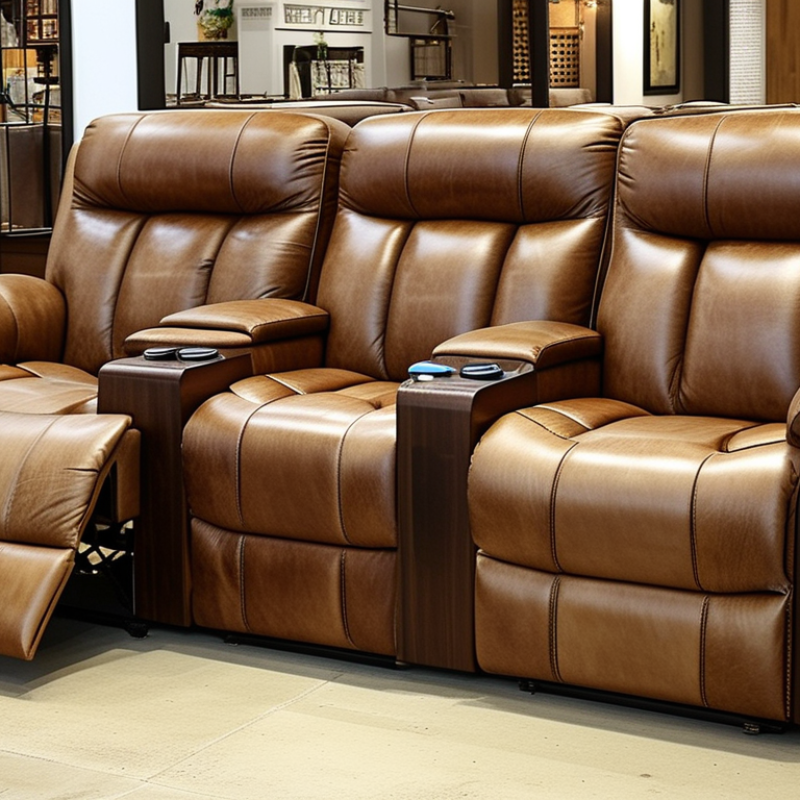
Buying tip: For most households, a strong combination is top-grain leather on the main contact surfaces, resilient high-density foam, reinforced upholstery seams, a kiln-dried hardwood or quality plywood frame, and a smooth steel reclining mechanism. Always verify the actual material specification, upholstery coverage, weight limit, dimensions, and warranty terms before purchase.
Choosing the best leather recliner sofa set starts with its reclining mechanism, not its appearance.
Power reclining offers precise positioning, while manual levers usually respond faster during power interruptions. Test the footrest, backrest, and headrest separately. The movement should feel quiet and controlled, without sudden drops.
A 2023 American Time Use Survey report found that Americans spend about 5.3 hours daily on leisure activities. Small comfort problems can become noticeable quickly.
Look for adjustable lumbar support, a padded headrest, and a footrest that supports your ankles rather than your heels. The seat should keep your hips slightly below your knees.
The U.S. Consumer Product Safety Commission advises checking moving furniture for pinch points, especially around footrests and hinges. Choose controls that remain visible in dim light.
USB charging is convenient, but it should not distract from poor posture. Leather may feel firm at first. That is not always a fault.
Tips:
Sit in each position for at least ten minutes. Check whether your shoulders stay relaxed. Measure the fully extended depth before delivery.
Grand View Research’s motion furniture analysis identifies powered adjustment and personalized comfort as important market drivers. Yet, market growth does not guarantee a good fit.
I once preferred a softer cushion, but it caused my lower back to sink. Your first impression may need reconsideration.
Ask about motor noise, repair access, weight limits, and warranty coverage before purchasing.
Measure the room before choosing a leather recliner sofa set. Record doorway width, stair turns, wall length, and clearance behind each reclining seat. A practical rule is to leave at least 30 inches of walking space around moving furniture. Also check the recliner’s fully opened depth, not its showroom depth. I have seen attractive sets fail at the doorway. It is an avoidable mistake.
Use a floor plan, even a rough one. Mark windows, radiators, outlets, and television sightlines. The American Society of Interior Designers recommends planning circulation before furniture placement, while BIFMA X5.4 durability testing can include 100,000 reclining or seating cycles, depending on product category. Ask for the exact test classification. “Commercial grade” alone proves little. A firmer frame, reinforced joints, and a smooth operating mechanism usually matter more than thick padding.
Maintenance depends on the leather finish. Leather Naturally’s technical guidance distinguishes aniline, semi-aniline, and pigmented leather, and each finish reacts differently to spills and sunlight. Pigmented leather generally hides daily marks better. Aniline leather shows character sooner. Clean dust with a soft cloth, keep the sofa away from direct heat, and follow the supplier’s care sheet. Avoid household solvents. They can permanently change the surface. World Leather’s industry data shows leather remains a major global material, but quality varies widely by hide selection and finishing. Request material specifications, warranty limits, and replacement-part availability. I would not trust vague promises.
Compare the complete price, not only the number shown online. Include taxes, delivery, assembly, and possible stair fees. A lower price may hide thinner leather or a weaker reclining mechanism. Compare similar details: leather coverage, frame material, seat density, motor type, and weight capacity. Ask for a written quotation. I once underestimated delivery charges by focusing too much on the sofa itself.
Read the warranty before paying. Check separate coverage for the frame, leather, recliner mechanism, motor, and labor. Some warranties cover parts but exclude transportation or accidental damage. Ask how repairs are arranged and whether replacement parts remain available. A long warranty sounds reassuring, but unclear exclusions reduce its practical value. Keep the invoice, product specifications, and written support responses together.
Delivery terms reveal the retailer’s reliability. Confirm the expected date, delivery area, room placement, packaging removal, and stair access. Measure doorways, lifts, and tight hallway turns before ordering. Inspect the sofa immediately for scratches, loose stitching, uneven cushions, or operating noise. Photograph any issue before signing delivery paperwork. Check the retailer’s physical address, customer service response time, return process, and recent independent reviews. Do not rely on polished photographs alone. A retailer that answers detailed questions patiently is often more dependable, though this is not proof. Policies can change, so save the exact terms shown on your order date.
2106 N Glassell St, Orange, CA 92865
(714)-754-6669 | sale@site_be823a56-9df9-438e-acac-cd7d504ea0ad
Monday: 8:00 AM – 4:30 PM
Tuesday: 8:00 AM – 4:30 PM
Wednesday: 8:00 AM – 4:30 PM
Thursday: 8:00 AM – 4:30 PM
Friday: 8:00 AM – 4:30 PM