7 Tips for Choosing Ti 6Al 4V Grade 5 Titanium Bar

Choosing a Ti-6Al-4V (Grade 5) Titanium Bar takes more than checking the grade on a certificate. The right choice depends on the part’s loads, temperature, environment, and manufacturing route. A bar destined for a machined aircraft fitting may need different dimensions and inspection records from one used in a marine component. Small details matter.

Matthew J. Donachie, author of Titanium: A Technical Guide, is a recognized authority on titanium alloys. A practical paraphrase of his materials guidance is: “Match the alloy’s properties to the part’s actual service conditions.” Treat that as a selection principle, not a verified verbatim quotation. Grade 5 is valued for its strength and useful balance of properties, but the label alone cannot confirm suitability. Check the applicable specification, mill test certificate, heat treatment, product form, and dimensional tolerances. Ask whether the bar is annealed or supplied in another condition. Verify that the supplier’s documentation matches the order. Don’t skip this.

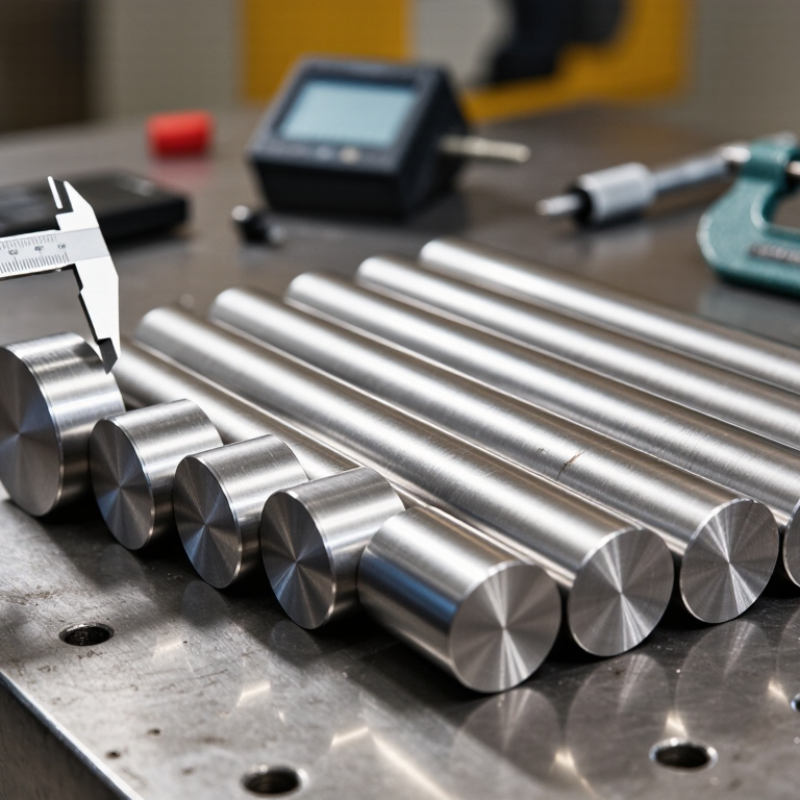
Surface condition deserves a close look. Under bright inspection light, scratches, seams, or uneven discoloration may prompt questions about handling or processing. They do not prove a defect by themselves. Request clarification and appropriate inspection before accepting material for critical work. One easy shortcut is choosing the lowest price. It can leave important questions unanswered. These seven tips will help buyers compare suppliers, confirm traceability, and select bar stock with fewer surprises. Even careful checks have limits; involve a qualified materials engineer when the application is demanding.
7 Tips for Choosing Ti 6Al 4V Grade 5 Titanium Bar

Understand the Composition and Properties of Ti-6Al-4V Grade 5

Ti-6Al-4V Grade 5 is an alpha-beta titanium alloy, typically containing about 6% aluminum and 4% vanadium, with titanium making up most of the balance. Exact composition limits depend on the applicable specification, so check the material certificate rather than relying on the grade name alone. Aluminum helps strengthen the alloy, while vanadium supports its balanced strength and ductility. It offers a high strength-to-weight ratio and good corrosion resistance. The details matter.

Tip: Confirm the required specification and verify the mill certificate.

Tip: Match the bar’s diameter and length to your design, allowing for machining stock.

Tip: Ask about the supplied condition, such as annealed or heat-treated material, because strength and workability can vary.

Tip: Inspect the surface for visible seams, pits, or handling damage before purchase.

Tip: Check that the test documentation covers the properties your application needs, not just chemical composition.

Tip: Consider machining requirements; Grade 5 can be challenging to cut, and tooling, heat, and feed rates deserve attention.

Tip: Review traceability and dimensional tolerances with the supplier. A polished surface can look reassuring, but appearance alone cannot confirm internal quality. I would not assume every bar behaves identically; processing history and condition can make a practical difference.

Match Bar Dimensions and Specifications to Your Application

Choose bar dimensions from the finished part and the machining plan, not from the drawing’s largest measurement alone. A bar that is too small can leave no allowance for cleanup. An oversized bar adds weight, cutting time, and material cost. Small details matter. Confirm diameter, length, straightness, and dimensional tolerances before ordering. For a long, slender component, even modest bow can complicate setup and produce uneven machining.

Match the specification to the bar’s intended use. Ti-6Al-4V Grade 5 is available in different product forms and conditions, so identify the applicable standard, required heat treatment, and mechanical properties. Do not assume every Grade 5 bar has identical documentation or surface condition. Ask for material test reports that link the chemistry and test results to the bar’s heat or lot. If the part needs substantial machining, specify enough stock for scale or surface removal. Do not guess. One easy oversight is ordering the right alloy but the wrong condition or tolerance. Review the drawing with the supplier, and clarify any requirement that is not stated clearly. A precise specification makes the material easier to inspect and more predictable to machine.

7 Tips for Choosing Ti 6Al 4V Grade 5 Titanium Bar - Match Bar Dimensions and Specifications to Your Application

Tip Application or requirement Dimensions and specifications to consider Selection guidance
1. Confirm the exact alloy and grade Parts requiring the strength and corrosion resistance associated with Grade 5 titanium Ti-6Al-4V; Grade 5; UNS R56400 Check that the material certificate identifies the alloy and grade. Do not treat Grade 5 as interchangeable with commercially pure titanium or other Ti-6Al-4V grades and conditions.
2. Specify the product form and governing standard Machined components made from round bar stock For bar, specify the applicable standard, such as ASTM B348, along with grade and condition Confirm that the ordered product form is bar, not billet, plate, or another form. Verify the current standard revision and any additional purchase requirements with the supplier.
3. Match the bar diameter to the finished part Small pins, shafts, spacers, and larger machined components Illustrative stock diameters: 10 mm, 25 mm, or 50 mm; actual availability varies Choose a diameter that provides enough material for the finished profile and machining allowance. Include the required diameter tolerance on the drawing or purchase specification.
4. Choose a suitable bar length Single components, repeated parts, or long shaft-like parts Illustrative cut lengths: 500 mm, 1,000 mm, or 2,000 mm; confirm available mill and cut lengths Allow for saw-cut loss, end trimming, and workholding. State whether the required length is a finished cut length or an approximate stock length.
5. Define the mechanical-property requirements Load-bearing components where strength and ductility are critical For Grade 5 bar under ASTM B348, commonly specified minimum tensile strength is 895 MPa, minimum yield strength is 828 MPa, and minimum elongation is 10%; requirements depend on the applicable standard and condition Use the values and test requirements stated in the applicable standard and material certificate. Specify heat-treatment condition and test direction where required by the design or procurement specification.
6. Account for density and machining needs Weight-sensitive parts and components that require substantial material removal Typical density of Ti-6Al-4V is about 4.43 g/cm³; finished dimensions and stock allowance should be set from the part drawing Estimate blank weight from the selected diameter and length, then include machining allowance. Plan tooling, cutting parameters, and workholding for titanium rather than assuming steel machining conditions.
7. Specify finish, inspection, and traceability Precision parts or applications with documented quality requirements State surface condition, dimensional tolerances, inspection requirements, and material certification needs Clarify whether the bar may have a hot-worked, machined, or ground surface, as applicable. Request traceability and certificate documentation appropriate to the project.
Note: The example stock diameters and lengths are illustrative selection examples, not standard size limits or a guarantee of availability. Confirm dimensions, tolerances, mechanical-property requirements, and certification against the applicable standard, drawing, and supplier documentation.

Check Manufacturing Method, Surface Condition, and Tolerances

When selecting Ti 6Al 4V Grade 5 bar, match the manufacturing route to the part. Wrought bar is typically forged or rolled, then heat-treated; these steps influence grain flow and mechanical consistency. For a highly loaded component, ask for the mill test report and confirm the stated condition, such as annealed. ASTM B348/B348M lists minimum tensile strength of 895 MPa and yield strength of 828 MPa for common annealed Grade 5 bar requirements. Check the applicable edition and product dimensions, since requirements can vary. Numbers matter.

Surface condition deserves a close look. A bright finish is not proof of sound material. Inspect for seams, laps, deep scratches, and discoloration, especially where machining allowance is small. Specify whether the bar is hot-finished, cold-worked, or ground, and agree on how surface flaws will be evaluated. A quick visual check helps, but it cannot replace documented inspection. That distinction is easy to miss.

Write tolerances into the purchase specification rather than relying on “standard.” State diameter, straightness, length, and permitted ovality, then confirm measurement locations and methods. MMPDS, the Metallic Materials Properties Development and Standardization handbook, compiles statistically based material design data; it is useful context, but it does not set your bar’s delivery tolerances. A practical receiving check uses calibrated micrometers at several points along the bar. Tight tolerances can reduce machining, yet they may raise cost or limit supply. Sometimes the tighter call is not worth it.

Verify Certifications, Traceability, and Test Results

A certificate is useful only when it matches the bar in front of you. For Ti-6Al-4V Grade 5, request the mill test report and confirm the stated grade, applicable specification, and revision. Check that the chemistry and mechanical properties are reported, not merely described as compliant. Details matter. Compare the heat number on the report with the bar tag, packing list, and any cut-piece labels. A mismatch can interrupt traceability after the material reaches your workshop. Small labels are easy to overlook.

Review the test results for values, units, and test methods, including tensile strength and elongation where required. Confirm whether results apply to the actual heat or lot, and ask how samples were selected. If a third-party test is supplied, verify its report identifies the tested material and laboratory. Keep records with purchase documents and retained material tags. Not every order needs the same testing depth; requirements depend on the part and its service conditions. Paperwork can look complete while leaving a gap. Ask the supplier to clarify any missing link before cutting or machining begins.

Compare Supplier Capability, Lead Time, and Total Cost

When comparing Grade 5 titanium bar suppliers, check more than a website’s stock list. Ask for recent ASTM B348 test reports, heat-number traceability, and confirmation that dimensions and condition match your order. ASTM B348 lists Grade 5 minimum tensile strength at 895 MPa and minimum yield strength at 828 MPa. Small details matter. Verify the quoted test scope, not just the certificate’s presence.

Lead times need clear definitions. Does the estimate begin after order confirmation, or after mill production starts? Ask whether material is physically in stock, how cutting affects dispatch, and what happens if inspection finds a nonconformance. The USGS Mineral Commodity Summaries 2024 estimated global titanium sponge production at about 270,000 metric tons in 2023. That upstream figure does not guarantee bar availability; conversion capacity and mill schedules still shape delivery. Small lots can wait.

Compare total landed cost, not price per kilogram alone. Include cutting, required inspection, freight, packaging, and potential scrap from machining allowances. Request quotations against the same dimensions, quantity, tolerances, and documentation requirements. A lower quote may omit testing or deliver oversized stock that creates extra machining. I would still question any unusually short lead time; it may be accurate, but the supplier should explain what material and records are ready to ship.

7 Tips for Choosing Ti-6Al-4V Grade 5 Titanium Bar

Use the chemistry limits as a specification baseline, then compare supplier capability, lead time, and total cost.

Chart: Commonly specified ASTM B348 Grade 5 composition ranges for aluminum and vanadium by weight. Confirm the applicable product specification and edition for your order.

  1. Verify the supplier’s experience with the required bar size, condition, and product specification.
  2. Request material test reports and check chemistry and mechanical test results against the order requirements.
  3. Confirm heat and lot traceability, identification, and documentation before shipment.
  4. Check available diameters, lengths, tolerances, straightness, and surface condition.
  5. Ask for a confirmed lead time based on your exact quantity and processing needs.
  6. Compare the full landed cost, including cutting, testing, packaging, freight, and applicable duties.
  7. Review inspection, nonconformance, and replacement terms before placing the order.