Why Is Laminar Flow Important in Laboratory Settings?
Laminar flow in laboratory settings plays a crucial role in ensuring the integrity of experiments. It creates a controlled environment where air moves in parallel layers. This minimizes turbulence and reduces the risk of contamination. In a lab, maintaining a sterile workspace is essential.
The phenomenon of laminar flow not only protects delicate samples but also enhances accuracy. Researchers rely on it to conduct sensitive biological tests. Any disruptions can lead to skewed results, affecting the validity of experiments. Equipment like laminar flow hoods provide this necessary protection, yet they require proper maintenance.
However, many labs struggle with implementing effective laminar flow systems. Poor design or inadequate training can lead to failures. Researchers must regularly assess their setups. Understanding how laminar flow works is key. Only then can labs achieve the highest standards of reliability and precision in their work.

Understanding Laminar Flow and Its Characteristics
Laminar flow is crucial in laboratory settings, particularly for maintaining sterile environments. This flow pattern presents a streamlined motion of fluid particles, minimizing turbulence. According to the American National Standards Institute (ANSI), laminar flow ensures that airborne particulates do not contaminate samples or processes. In controlled environments, such as cleanrooms, the effectiveness of laminar flow is paramount, reducing contamination risks significantly.
The characteristics of laminar flow include its predictability and uniformity. The airflow moves in parallel layers, which is particularly essential in microbiological safety cabinets. Research indicates that about 97% of airborne particles can be captured when employing proper laminar flow techniques. However, not all laboratory environments achieve this standard. Variables like airflow disruption can lead to compromised safety. Regular monitoring and maintenance of systems are necessary to sustain the benefits of laminar flow. Even slight disturbances can result in significant contamination events.
In practice, laboratories must evaluate their laminar flow systems continually. The challenge lies in ensuring that all components function optimally. Some researchers overlook the importance of routine checks. This oversight can diminish the protective qualities of laminar flow. By recognizing the need for maintenance and staff training, laboratories can enhance safety and reliability.
Why Is Laminar Flow Important in Laboratory Settings? - Understanding Laminar Flow and Its Characteristics
| Characteristic |
Importance |
Application in Labs |
| Uniform Velocity |
Ensures even distribution of particles and chemicals |
Used in cleanrooms and chemical fume hoods |
| Low Turbulence |
Reduces contamination risk |
Critical in microbiology labs |
| Controlled Environment |
Maintains specific temperature and humidity levels |
Used in biological sample storage |
| Particle Filtration |
Filters out harmful particles and microbes |
Essential in pharmaceutical production |
| Airflow Direction |
Minimizes cross-contamination between areas |
Important in handling sensitive materials |
The Role of Laminar Flow in Contaminant Control
Laminar flow is crucial in laboratory environments, particularly for contaminant control. This flow design helps to maintain a sterile working space. It minimizes air turbulence, which can carry dust and microbial particles. As a result, the risk of contamination in sensitive experiments is significantly reduced.
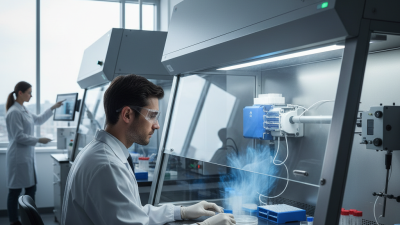
In a laminar flow hood, clean air moves in a smooth, parallel stream. This feature creates a barrier against contaminants. Scientists rely on this technology during procedures that require high sterility. However, improper use or maintenance can lead to flow disruptions. Regular checks are essential to ensure effectiveness.
Contaminants can still find their way into the workspace. It's important to assess how equipment placement affects air circulation. Sometimes, researchers may overlook these factors, leading to unforeseen contamination. Understanding laminar flow's dynamics is vital, but it requires ongoing learning and adaptation. Striking a balance between technology and practical application remains a constant challenge in laboratory settings.
Applications of Laminar Flow in Laboratory Environments
Laminar flow plays a crucial role in laboratory environments. This controlled airflow pattern significantly reduces the risk of contamination. In biological labs, where precise outcomes are vital, maintaining sterile conditions is essential. Laminar flow hoods provide a clean workspace by directing filtered air over surfaces, preventing particles from settling.
In chemical analysis, laminar flow helps in minimizing cross-contamination between samples. It creates a stable environment for sensitive reactions and measurements. Researchers can rely on laminar flow systems to enhance the validity of their results. However, improper usage or maintenance of these systems can lead to failures. Regular inspections are necessary to ensure optimal function.
Improving productivity is another benefit of laminar flow in labs. It allows scientists to focus on their work without worrying about external contaminants. Yet, achieving this level of safety requires training and awareness. Workers must understand the importance of following protocols in laminar flow areas. Complacency can lead to significant setbacks and affect research outcomes.
Advantages of Laminar Flow Over Turbulent Flow
Laminar flow creates a controlled environment crucial in laboratory settings. Unlike turbulent flow, which mixes air and particles, laminar flow ensures a steady stream of air. This minimizes contamination risks. It allows researchers to work confidently, knowing their samples are protected.
The advantage of laminar flow is evident in sensitive experiments. With particulate matter kept at bay, results become more reliable. Clean benches utilize this principle to maintain sterility. Researchers can focus on their work rather than constantly worrying about external variables. Reducing contamination helps achieve more accurate results.
However, laminar flow systems are not without challenges. They require regular maintenance to function effectively. If filters are not replaced, performance can diminish. Researchers must remain vigilant to maintain clean conditions. Understanding these nuances can elevate lab practices, making them more effective.
Best Practices for Maintaining Laminar Flow Systems
Maintaining laminar flow systems in laboratory settings is crucial for ensuring a sterile environment. These systems provide a controlled airflow that minimizes contamination risks. Regular maintenance is essential to keep them functioning optimally. This includes routine inspection of HEPA filters and ensuring they are free from blockages. Clean air is vital for sensitive experiments.
Another step is to train personnel on best practices. Proper gowning procedures can prevent particulate contamination. Staff should learn the importance of minimizing movements within the laminar flow zone. Simple tasks, like not cluttering the working area, can greatly enhance airflow efficiency.
However, even the best systems can falter. Occasionally, airflow can be disrupted by external factors. Regular audits can help identify these issues early. Keeping detailed records of maintenance and any irregularities is beneficial. Reflecting on past experiences can guide future practices. A commitment to continuous improvement in managing these systems fosters better outcomes in research.
Importance of Laminar Flow in Laboratory Settings