Why is Temperature In Laboratory Critical for Accurate Results?
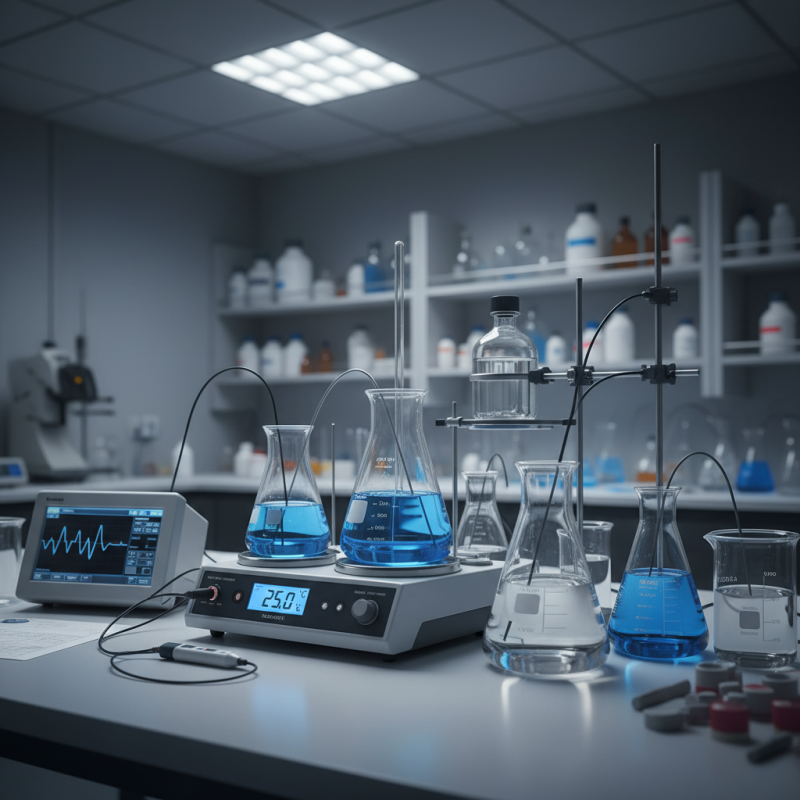
Temperature in laboratory settings is a crucial factor influencing experimental outcomes. Accurate temperature control ensures reliable results in various scientific disciplines. Fluctuations in temperature can lead to unexpected reactions, skewing data interpretation.
Inappropriate temperature levels can result in compromised sample integrity. This issue highlights the need for diligent monitoring throughout experiments. Laboratories must invest in precise temperature measurement tools. Yet, many facilities still overlook standard operating procedures.
Reflecting on these practices can enhance research quality. Understanding how temperature affects reactions is vital. It’s not just about compliance; it’s about producing valid results. A simple oversight can lead to significant scientific errors. Attention to temperature in laboratory settings is necessary for reliability and accuracy.
Importance of Temperature Control in Laboratory Experiments
In laboratory experiments, temperature control is essential. It affects chemical reactions, biological processes, and physical properties. Slight variations can lead to different results. For accurate measurements, maintaining a stable temperature is key.
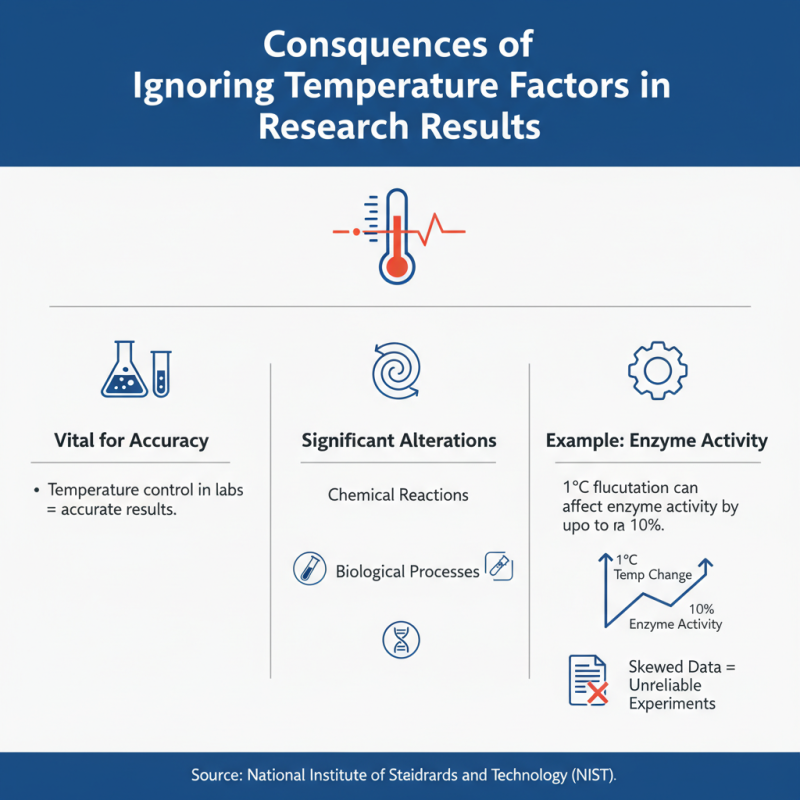
Consider the impact of temperature on enzyme activity. Many enzymes operate optimally at specific temperatures. Deviations can reduce their effectiveness. Implementing temperature monitoring systems helps maintain conditions. It's crucial to record these temperatures along with experiment results.
Tips: Always calibrate your thermometers regularly. This ensures accuracy in measurements. Additionally, use insulated containers to minimize temperature fluctuations. Adjustments may be needed during experiments. Document any changes in temperature and their potential effects on results. Staying observant is vital for credible outcomes. Even minor temperature changes can lead to significant discrepancies.
Effects of Temperature Variations on Chemical Reactions
Temperature plays a crucial role in laboratory experiments. Even slight variations can significantly affect chemical reactions. For instance, an increase in temperature often speeds up reaction rates. This can lead to unexpected results. Conversely, lower temperatures may slow reactions. Accurate measurements are essential to produce reliable data.
Maintaining consistent temperature is vital. Fluctuations can cause discrepancies in experimental outcomes. It’s important to monitor the environment closely. Laboratory equipment like incubators or thermostats can aid in this. Ensure regular calibration of these devices. Always keep a log of temperature changes during experiments.
**Tips:** Regularly check the temperature settings. Simple changes can lead to better results. Consider ambient temperature effects. Small fluctuations can have large impacts. Understanding your specific chemical reactions is key to success.
Why is Temperature In Laboratory Critical for Accurate Results? - Effects of Temperature Variations on Chemical Reactions
| Temperature (°C) |
Reaction Rate (mol/L/s) |
pH Level |
Product Yield (%) |
| 10 |
0.01 |
7.5 |
30 |
| 20 |
0.05 |
7.2 |
50 |
| 30 |
0.15 |
6.8 |
75 |
| 40 |
0.25 |
6.5 |
90 |
| 50 |
0.35 |
6.2 |
95 |
Impact of Temperature on Biological Processes in Lab Settings
Temperature plays a crucial role in laboratory settings, particularly in biological processes. Many experiments are sensitive to temperature variations. For instance, enzymes, essential for many biochemical reactions, have optimal temperature ranges. Deviations can lead to decreased activity or denaturation. According to research, a mere 5°C fluctuation can double or halve enzyme activity, affecting results significantly.
In microbiology, temperature impacts growth rates. Most bacteria thrive at specific temperatures, around 37°C for many pathogens. Deviating by just a few degrees can alter cell viability and reproduction rates. A study showed that at 30°C, E. coli growth rates differ by 50% compared to growth at 37°C. This discrepancy emphasizes how crucial accurate temperature control is in obtaining reliable experimental outcomes.
Temperature control isn't always perfect in labs. Inconsistent environmental conditions can arise from equipment failures or human error. Lab coats left on heaters or doors left open can lead to unintended temperature changes. Such oversights have led to false conclusions in studies, driving the need for strict protocol adherence. Maintaining an optimal environment requires diligence and continuous monitoring to ensure that results are both reliable and valid.
Methods for Maintaining Consistent Laboratory Temperatures
Maintaining consistent laboratory temperatures is essential for achieving accurate results. Studies have shown that a temperature fluctuation of just 1°C can affect chemical reactions significantly. For instance, enzymatic reactions may slow down or become inefficient, leading to unreliable data. The American Chemical Society recommends strict temperature controls for sensitive experiments, highlighting the precision needed in laboratory settings.
To ensure stable temperatures, several methods can be employed. A dedicated HVAC system is critical. It should be regularly maintained to avoid disruptions. Additionally, using thermally insulated equipment minimizes external influences. Many labs implement temperature logging systems to monitor fluctuations continuously. There are reports indicating that labs with real-time monitoring see a reduction in data variability by up to 25%.
Despite advancements, some laboratories still face challenges. Equipment might fail unexpectedly, leading to temperature spikes. Researchers must remain vigilant and adaptive. Routine checks and balances can mitigate such risks. A proactive approach to temperature control leads to improved accuracy and reliability in experimental results.
Impact of Temperature Variations on Laboratory Results
This chart illustrates how varying laboratory temperatures, ranging from 5°C to 45°C, can affect the accuracy of experimental results, with 25°C yielding the most accurate results at 100%. Maintaining consistent temperatures is critical for reliable laboratory outcomes.