What Are the Top Types of Cheap Laboratory Glassware?

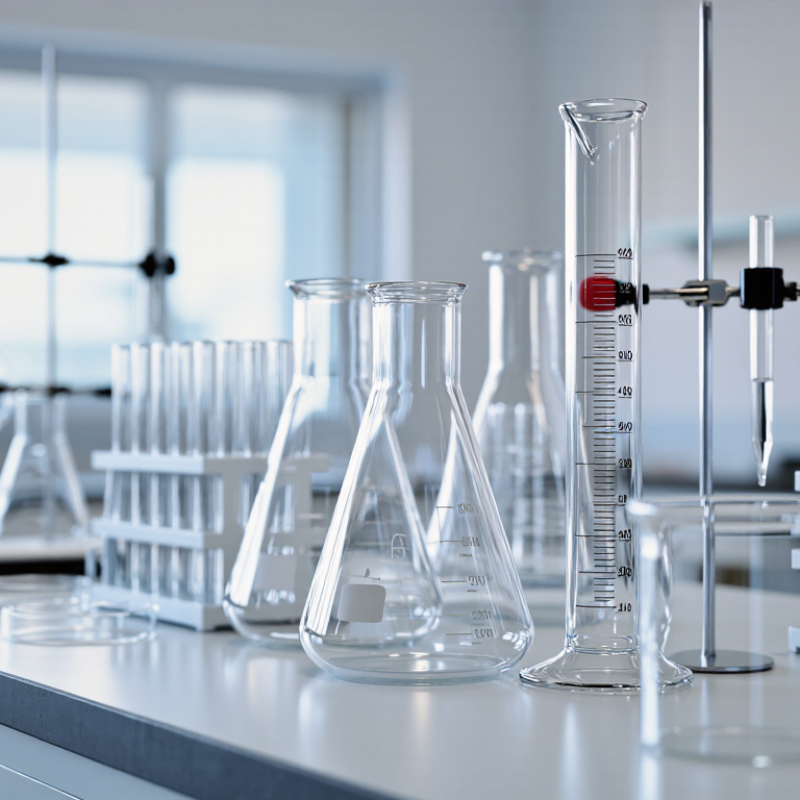
Cheap Laboratory Glassware can make a teaching lab or small research bench more affordable, but low price alone says little about quality. The right choice depends on the task: a narrow-neck Erlenmeyer flask handles swirling liquids, while a graduated cylinder offers clearer volume readings. Grand View Research’s Laboratory Glassware Market report reviews product categories and demand across laboratory applications. It is useful context, though it does not measure “cheap” products as a separate quality class. That distinction matters.

Material and workmanship deserve a closer look. ISO 3585 specifies properties for borosilicate glass 3.3, a common choice where thermal and chemical resistance matter. Buyers should also inspect graduations, rim finish, wall consistency, and product documentation. A small chip can turn an inexpensive beaker into a poor bargain. Feynman’s warning applies to purchasing, too: “The first principle is that you must not fool yourself—and you are the easiest person to fool.” Richard Feynman was a physicist, not a glassware specialist; this is a principle of careful scientific judgment, not a glassware-specific endorsement. Still, price labels can mislead. This guide compares common low-cost types and explains where each fits, so readers can judge value by intended use, not price alone.
What Are the Top Types of Cheap Laboratory Glassware?

Start with Glass Type: ASTM E438 Defines Types I, II, and III

For cheap laboratory glassware, start with material, not shelf price. ASTM E438 classifies laboratory glass into three types: Type I borosilicate, Type II treated soda-lime, and Type III soda-lime glass (ASTM E438, Standard Specification for Glasses in Laboratory Apparatus). These categories describe performance, not a simple quality ranking. Type I generally tolerates thermal shock and chemical exposure better, making it a practical choice for heated work and repeated washing. Type II has improved hydrolytic resistance from surface treatment, while Type III is typically suited to less demanding applications.

Three types. One easy mistake is assuming every clear beaker handles heat the same way.

For budget comparisons, check the stated glass type alongside wall thickness, graduations, and intended use. A thin Type I vessel may still chip if knocked against a metal sink; a cheaper Type III flask may be adequate for dry storage but unsuitable for repeated heating. ASTM E438 is a useful baseline, yet it does not replace checking chemical compatibility or the supplier’s product specifications. I would not buy by type alone.

Tips: Match glass type to the task, then inspect rims and bases for chips. For heated work, choose Type I and avoid sudden temperature changes. Keep one sample under routine use before ordering a larger batch.

Choose Beakers for Mixing: ISO 3819 Specifies Laboratory Beaker Requirements

Beakers are inexpensive workhorses for dissolving solids, combining reagents, and holding samples during transfer. ISO 3819:2015 specifies requirements for laboratory beakers, including dimensions and design features across nominal capacities. When comparing low-cost options, check that the stated capacity and graduations are clear, the rim is even, and the pouring spout is not chipped. A printed scale is useful for rough dispensing, not accurate volume measurement. That distinction matters.

Glass composition is another practical check. ISO 3585:1998 gives borosilicate glass 3.3 a linear expansion coefficient of about 3.3 × 10⁻⁶ K⁻¹, a useful reference when evaluating thermal changes. It does not mean every beaker is safe from sudden temperature shifts. A cold beaker placed on a hot plate can still crack. Choose a vessel sized for the batch, leave room for stirring, and inspect the base for scratches before heating. This is easy to overlook. A cheap beaker can serve routine mixing well, but savings mean little if its markings are hard to read or its glass quality is uncertain. ISO compliance helps set expectations; it does not replace a visual check or careful handling.

Use Test Tubes for Samples: ISO 4142 Covers Laboratory Test Tubes

Test tubes are among the simplest types of laboratory glassware, but a low price should not be the only selection criterion. ISO 4142:2002, Laboratory glassware — Test tubes, sets out requirements and test methods for laboratory test tubes. That is a useful baseline when comparing inexpensive options. Check that each tube’s dimensions and opening suit the rack, stopper, or pipette used at the bench. Small mismatches can slow sample handling. They can also make a routine workflow less reliable.

For sample work, inspect the glass for chips, uneven rims, and visible defects before use. Match the tube’s capacity to the sample volume, leaving room for mixing where needed. A narrow tube may help with small samples, while a wider opening makes transfer easier. Not every cheap tube is a poor choice. Still, confirm its stated heat and chemical limits rather than assuming all laboratory glass tolerates the same conditions. ISO 4142 is a technical specification, not a guarantee that every product sold as a test tube has been tested against it. Ask suppliers for conformity details, and keep the standard’s edition in your purchasing records. A brief check can prevent a costly repeat.

Common Laboratory Glassware: Representative Capacities

A comparison of commonly available nominal sizes for basic laboratory glassware.

Values show representative commonly available capacities, not fixed limits; sizes vary by design and supplier. Test tubes are intended for holding samples, and ISO 4142 specifies requirements for laboratory test tubes. Capacity alone does not determine cost.

Measure Liquids with Cylinders: ISO 4788 Sets Graduated-Cylinder Requirements

Cheap laboratory glassware can still support routine measurements when the vessel suits the task. ISO 4788:2005 covers graduated measuring cylinders with nominal capacities from 5 mL to 2,000 mL and defines Class A and Class B performance. Class A has tighter permissible errors, making it a better choice when repeatability matters. For approximate mixing, a lower-cost Class B cylinder may be adequate. Small details matter. Read the graduation interval, class marking, and reference temperature before use; ISO 4788 uses 20 °C as its reference temperature.

A cylinder’s scale is only part of the measurement. NIST’s Selected Procedures for Volumetric Calibrations, NISTIR 7383, describes gravimetric calibration: weigh the water, account for its density at the measured temperature, then determine volume. That method helps reveal errors a quick visual check can miss. At the bench, set the cylinder on a level surface and read the bottom of the meniscus at eye height. Bubbles, residue, or a tilted base can distort the reading. There is a catch. A cheap cylinder is not automatically unreliable, but a worn scale or chipped rim deserves caution. Record the class and capacity in purchasing notes; otherwise, replacements may not match the original tolerance.

What Are the Top Types of Cheap Laboratory Glassware? — Measure Liquids with Cylinders: ISO 4788 Sets Graduated-Cylinder Requirements

Glassware or Capacity Typical Use Measurement and Calibration Relevant Standard or Accuracy Relative Cost
Common, budget-conscious laboratory glassware
Graduated measuring cylinder Measuring and transferring liquid volumes when more precision than a beaker provides is useful. Graduated scale; available in several capacities and accuracy classes. Read the meniscus at eye level. ISO 4788 specifies requirements for graduated measuring cylinders, including dimensions, graduations, and tolerances. Low to moderate
Beaker Mixing, heating, and holding liquids. Printed graduations, when present, are generally approximate and are not intended for precise volume measurement. Use a measuring cylinder or volumetric glassware when accurate volume measurement is required. Low
Erlenmeyer flask Mixing by swirling, heating, and holding solutions; its narrow neck helps reduce splashing. Volume markings, when present, are generally approximate rather than precision graduations. Not a substitute for a volumetric flask or calibrated measuring cylinder. Low
Volumetric flask Preparing a solution to one specified volume, such as a standard solution. Usually has a single calibration mark and is designed for a specified volume. Check the flask’s stated class, temperature, and calibration marking; it is not intended for measuring many different volumes. Moderate
Graduated pipette Measuring and transferring different liquid volumes within the pipette’s range. Graduated scale; delivery technique and the pipette’s calibration marking affect the result. Check whether it is marked to deliver (TD) or to contain (TC), and follow its stated class and instructions. Low to moderate
Illustrative ISO 4788 graduated-cylinder tolerance values
5 mL cylinder Measuring small liquid volumes. Nominal capacity: 5 mL. Class A: ±0.05 mL; Class B: ±0.1 mL. Low to moderate
10 mL cylinder Measuring small liquid volumes. Nominal capacity: 10 mL. Class A: ±0.1 mL; Class B: ±0.2 mL. Low to moderate
25 mL cylinder Routine measurement of small-to-medium liquid volumes. Nominal capacity: 25 mL. Class A: ±0.25 mL; Class B: ±0.5 mL. Low to moderate
50 mL cylinder Routine liquid measurement and transfer. Nominal capacity: 50 mL. Class A: ±0.5 mL; Class B: ±1.0 mL. Low to moderate
100 mL cylinder General-purpose measurement of liquid volumes. Nominal capacity: 100 mL. Class A: ±0.5 mL; Class B: ±1.0 mL. Low to moderate
250 mL cylinder Measuring larger routine volumes. Nominal capacity: 250 mL. Class A: ±1.0 mL; Class B: ±2.0 mL. Low to moderate
500 mL cylinder Measuring medium-to-large liquid volumes. Nominal capacity: 500 mL. Class A: ±2.5 mL; Class B: ±5.0 mL. Moderate
1,000 mL cylinder Measuring larger liquid volumes. Nominal capacity: 1,000 mL. Class A: ±5 mL; Class B: ±10 mL. Moderate

Notes: Cylinder tolerances shown are ISO 4788 values; confirm the applicable standard edition and the markings on the specific instrument. Class A generally has tighter tolerances than Class B. Relative cost is a broad comparison, not a quoted price, and varies with capacity, material, class, and supplier. “Cheap” glassware should still be suitable for the required measurement accuracy and chemical compatibility.

Select Flasks for Heating: ISO 1773 Covers Narrow-Necked Boiling Flasks

For low-cost laboratory glassware, a narrow-necked boiling flask can be a practical choice when a liquid needs controlled heating. ISO 1773 sets dimensional requirements for this flask type, making it easier to compare basic shape and capacity across suppliers. Check the stated capacity and neck dimensions against your stopper, tubing, or other fittings. A standard helps with comparison. It does not guarantee every fitting will match.

Before heating, inspect the flask under good light. A small chip near the neck or base can become a failure point. Confirm the glass type and follow its heating guidance; ISO 1773 alone does not tell you how much thermal shock a flask can withstand. Heat gradually, avoid sudden contact with cold surfaces, and support a round-bottom flask securely. Cheap can be adequate. But thin spots, rough rims, or unclear specifications deserve a second look. I would not choose by price alone, even for routine work.