2026 Top Types of Laminar Flow in Laboratory

In 2026, Laminar Flow In Laboratory systems remain essential for controlling airborne particles during sensitive laboratory work. These systems direct filtered air through a defined workspace, creating a cleaner environment for samples, instruments, and procedures. However, “laminar” does not automatically mean sterile. That distinction matters.

Dr. Julian W. Tang, a recognized clinical virologist and airflow researcher, has stated, “Ventilation is not a silver bullet.” His warning applies to laboratory airflow as well. A clean bench may protect the product, while a biosafety cabinet can protect the product, worker, and surrounding environment. These systems are not interchangeable. Their roles depend on risk assessment, containment requirements, and laboratory procedures.

This article examines the leading types expected to shape laboratory design in 2026. Horizontal laminar flow benches move air toward the operator, offering strong product protection but limited personnel protection. Vertical systems send filtered air downward, often supporting delicate assembly and material handling. Class II biosafety cabinets use controlled airflow patterns and exhaust filtration for higher-risk applications. The details are physical. Watch the smoke pattern. Check the sash position. Measure airflow velocity. Confirm HEPA filter performance.

Standards and certification provide reliability, but daily behavior still influences performance. A crowded work zone can disrupt airflow. An open door can change pressure balance. Small mistakes matter. No classification is perfect.

The following outline compares airflow direction, protection level, maintenance demands, energy use, and suitable applications. It also considers monitoring methods, operator training, and practical limitations. Reliable selection requires evidence, not attractive specifications alone.
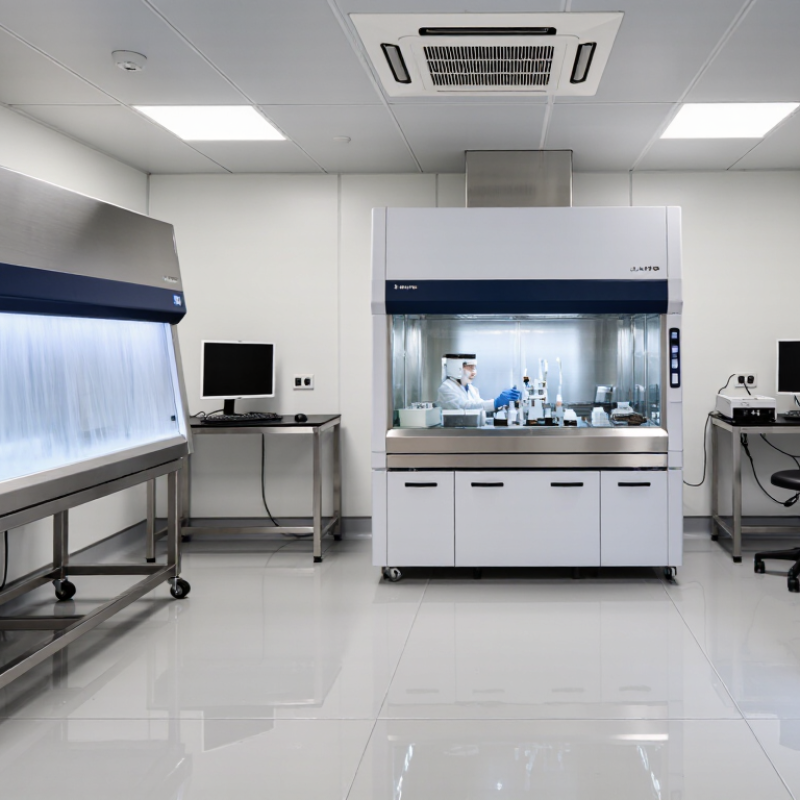
2026 Top Types of Laminar Flow in Laboratory

Laminar Flow Fundamentals: 0.36–0.54 m/s Air Speeds in 2026 Labs

In 2026 laboratories, laminar flow remains central to contamination control.

The most common designs are horizontal and vertical unidirectional airflow. Horizontal systems move filtered air across the work surface, while vertical systems push air downward toward a perforated base. Both depend on stable velocity, not appearance alone.

A practical operating range is 0.36–0.54 m/s, or about 71–106 feet per minute.

This range supports steady sweeping action without creating unnecessary turbulence. ISO 14644-1:2015 classifies cleanroom air cleanliness by airborne particle concentration, not by velocity alone. Therefore, operators should verify particle counts, airflow uniformity, filter integrity, and recovery time.

A visible stream is not proof of clean air.

NSF/ANSI 49-2022 uses performance testing for biological safety cabinets, including inflow and downflow measurements. Its approach shows why commissioning matters. A cabinet may reach 0.45 m/s at one point yet perform unevenly across the work zone. Small drafts from doors, people, or nearby equipment can disturb protection.

Keep hands slow.
Keep grilles clear.
Measure again after maintenance.

The 0.36–0.54 m/s range is useful, but it is not a universal setting. Some applications need tighter control, and real laboratory conditions can expose weaknesses that factory tests miss.

Vertical Laminar Flow Benches: HEPA Filtration at 99.97% for 0.3 µm Particles

Vertical Laminar Flow Benches: HEPA Filtration at 99.97% for 0.3 µm Particles

Vertical laminar flow benches push filtered air downward across the work surface. This steady airflow helps reduce dust, fibers, and airborne particles around exposed samples. A HEPA filter rated at 99.97% for 0.3 µm particles provides strong particulate control under tested conditions. It does not remove every chemical vapor or guarantee sterile work.

The difference is visible during practical use. Air moves from the filter face toward the bench surface, then exits near the front or sides. Operators should avoid blocking this path with tall bottles, notebooks, or loose sleeves. Keep materials arranged from clean to less clean. Small changes matter.

I have found routine checks more valuable than impressive specifications. An airflow meter can identify weak velocity, while smoke visualization can reveal turbulence. Replace or inspect prefilters when dust builds up. HEPA filters also need documented testing after installation and maintenance. The 0.3 µm rating is often misunderstood; it refers to a challenging test particle size, not a complete performance range.

These benches protect the work, not necessarily the operator. Hazardous biological or chemical procedures require a properly selected containment system. Even careful users make mistakes, especially when the workspace becomes crowded. A clear surface supports better airflow and better judgment.

Horizontal Laminar Flow Benches: Product Protection Across ISO Class 5 Work Zones

Horizontal Laminar Flow Benches: Product Protection Across ISO Class 5 Work Zones

In 2026, horizontal laminar flow benches remain practical choices for product protection in ISO Class 5 work zones. Filtered air travels steadily from the rear supply area toward the operator. Air moves sideways. This unidirectional pattern helps reduce particles near exposed sterile components, precision parts, and sensitive laboratory materials. Properly designed systems should provide stable velocity, low turbulence, and accessible working space. However, an ISO Class 5 rating describes air cleanliness, not automatic protection for personnel or the surrounding room.

Daily performance depends on more than the filter. Operators should avoid blocking the rear grille, placing large objects directly in the airflow, or moving hands rapidly across open materials. A clean, uncluttered surface supports better protection. Routine checks should include airflow velocity, particle counts, filter condition, and alarm function. Professional qualification records also improve reliability. In practice, benches can perform well, yet small setup errors still create weak zones. That deserves honest attention.

Tips: Keep critical items inside the clean airflow path. Load materials slowly, from cleanest to less sensitive areas. Disinfect surfaces with compatible agents and follow the validated contact time. Do not treat the bench as a substitute for proper aseptic technique. Document cleaning and maintenance activities. Recheck performance after relocation or major service, because room layout and nearby equipment can change airflow behavior.

2026 Top Types of Laminar Flow in Laboratory — Horizontal Laminar Flow Benches: Product Protection Across ISO Class 5 Work Zones

ISO Class 5 work zones are controlled by maximum airborne particle concentrations. The chart shows the ISO 14644-1 limits for particles of different sizes in a horizontal laminar flow work area.

Values represent maximum permitted particles per cubic metre of air under ISO Class 5 classification conditions. Horizontal laminar flow benches use unidirectional airflow to help protect exposed products from particles entering the work zone.

Cleanroom Laminar Flow Hoods: ISO 14644-1 Particle-Control Requirements

2026 Top Types of Laminar Flow in Laboratory

Cleanroom laminar flow hoods use controlled, one-directional air to reduce particles near exposed work. Common designs include horizontal and vertical airflow models. Horizontal airflow moves filtered air toward the operator. Vertical airflow moves it downward toward the work surface. The suitable type depends on the process, equipment height, heat load, and operator position.

ISO 14644-1 classifies airborne cleanliness by particle concentration and specified particle sizes. It does not certify a hood by itself. A laboratory should define the required classification, then verify airflow performance under realistic operating conditions. Particle counts, airflow uniformity, recovery time, and filter integrity provide useful evidence. A clean particle reading is not enough. Poor technique, open doors, vibration, or crowded workspaces can still compromise protection. In practice, teams sometimes focus heavily on the number and overlook daily behavior. That is a mistake worth reviewing.

Tips: Keep the work area uncluttered. Place critical items inside the airflow path without blocking it. Record particle results, alarm events, cleaning actions, and maintenance dates. Test the hood after installation, relocation, filter replacement, and major repairs. Train users to move slowly and avoid reaching across sterile materials. Remember that laminar flow controls particles, but it may not control chemical vapors or biological hazards. A qualified cleanroom professional should interpret ISO 14644-1 results alongside the laboratory’s risk assessment and operating procedures.

2026 Top Types of Laminar Flow in Laboratory - Cleanroom Laminar Flow Hoods: ISO 14644-1 Particle-Control Requirements

Comparison of Common Laboratory Laminar Flow Hood Configurations
Laminar Flow Type Airflow Direction Primary Protection Typical Laboratory Uses Typical Cleanliness Target Key Advantages Important Limitations
Horizontal Laminar Flow Hood HEPA-filtered air moves from the rear supply plenum horizontally toward the operator. Product protection Aseptic assembly, sterile component handling, non-hazardous media preparation, and particle-sensitive laboratory work. Often designed for an ISO Class 5 work zone when properly installed, maintained, and validated. Direct sweeping airflow across the work surface; excellent protection against particles settling on exposed materials. Air is directed toward the operator, so it must not be used for infectious, toxic, radioactive, or otherwise hazardous materials.
Vertical Laminar Flow Hood HEPA-filtered air moves downward from the upper supply area across the work zone. Product protection Clean assembly, sterile transfers, optical or electronic component work, and preparation of non-hazardous materials. Often designed for an ISO Class 5 work zone when performance is verified under operating conditions. Efficient downward particle displacement; usually requires less bench depth than a horizontal configuration. It is not automatically a personnel- or environmental-protection device; hazardous materials require an appropriate containment cabinet.
Clean Bench Horizontal or vertical unidirectional HEPA-filtered airflow across the work area. Product protection Non-hazardous sterile product handling, sample staging, and contamination-sensitive assembly. Commonly specified for an ISO Class 5 work area, subject to site testing and operating conditions. Simple operating concept and effective control of airborne particles over exposed work. Does not protect the operator or room from hazardous aerosols, volatile chemicals, or biological agents.
Aseptic Processing Laminar Flow Module Unidirectional HEPA- or ULPA-filtered airflow integrated into a larger process, isolator, or cleanroom zone. Product protection Critical aseptic processing steps, filling zones, sterile transfer points, and controlled manufacturing operations. Frequently designed around an ISO Class 5 critical zone, with the surrounding area controlled at a less stringent class as appropriate. Can provide localized high-grade particle control within a broader controlled environment. Performance depends on enclosure design, airflow balance, interventions, recovery, and the surrounding cleanroom classification.
Biological Safety Cabinet, Class II Vertical inward airflow at the front opening combines with HEPA-filtered downward airflow; exhaust is HEPA filtered. Personnel, product, and environmental protection Work involving biological materials that require containment and protection from contamination. Many Class II designs provide an ISO Class 5 or better work zone when certified and operated correctly. Provides a higher level of containment than a clean bench through inward airflow and filtered exhaust. Not interchangeable with a clean bench; chemical compatibility, exhaust configuration, certification, and risk assessment are essential.
Glovebox or Isolator with Unidirectional Flow HEPA-filtered airflow is maintained inside a sealed or highly contained enclosure. Product and process protection High-containment work, potent compounds, sensitive aseptic operations, and processes requiring restricted operator access. Critical internal zones may be designed to meet an ISO Class 5 target after installation and operational qualification. Reduces direct operator contact and can provide strong separation between the process and the surrounding room. Higher capital and operating complexity; glove integrity, pressure control, transfer procedures, and decontamination must be managed.
ISO 14644-1 Airborne Particle Concentration Limits by Cleanliness Class
ISO Class ≥0.1 µm
particles/m³
≥0.2 µm
particles/m³
≥0.3 µm
particles/m³
≥0.5 µm
particles/m³
≥1.0 µm
particles/m³
≥5.0 µm
particles/m³
ISO Class 3 1,000 237 102 35 8 Not specified
ISO Class 4 10,000 2,370 1,020 352 83 Not specified
ISO Class 5 100,000 23,700 10,200 3,520 832 29
ISO Class 6 1,000,000 237,000 102,000 35,200 8,320 293
ISO Class 7 Not specified Not specified Not specified 352,000 83,200 2,930
ISO Class 8 Not specified Not specified Not specified 3,520,000 832,000 29,300
ISO 14644-1 classifies airborne particle cleanliness in a specified zone; it does not by itself certify a hood, define biological containment, or establish chemical safety. Actual classification should be confirmed through documented testing under defined occupancy and operating conditions.

Laminar Flow and Biosafety Cabinets: Comparing Product and Personnel Protection

2026 Top Types of Laminar Flow in Laboratory

Laminar Flow and Biosafety Cabinets: Comparing Product and Personnel Protection

A laminar flow workstation delivers HEPA-filtered air across the working surface. It protects the product from airborne contamination. Vertical models push clean air downward, while horizontal models move air toward the operator. That direction matters. Neither design protects personnel from hazardous aerosols or infectious materials. A clean bench can therefore support sterile assembly, but it is not a biosafety cabinet.

Biosafety cabinets are engineered for stronger containment. Class II cabinets use inward airflow, HEPA filtration, and controlled exhaust pathways. They can protect personnel, products, and the surrounding environment when correctly installed and operated. Class I cabinets mainly protect personnel and the environment, not the product. Class III cabinets provide a sealed workspace for higher containment needs. Cabinet classes are not interchangeable.

In practical laboratory work, selection should begin with a documented risk assessment. Consider the material, procedure, aerosol potential, and required sterility. Watch the airflow alarm. Keep grilles clear. Do not overcrowd the work zone. Small details matter. A spotless surface does not prove adequate containment. Likewise, a sophisticated cabinet cannot compensate for poor certification, damaged seals, or careless technique. Annual testing and trained users remain essential, although testing schedules may vary by local requirements and risk. Even experienced teams should review their assumptions when procedures change.