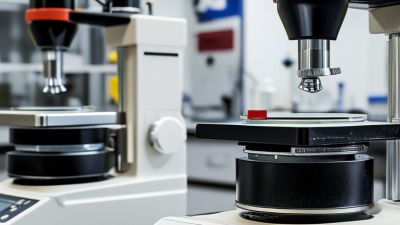
Choosing the right Science Laboratory Supplies is not simply a matter of comparing prices. It requires practical judgment, technical knowledge, and careful attention to laboratory routines. A glass beaker may look suitable online, yet its volume markings, thermal resistance, or chemical compatibility can affect daily results. The same concern applies to pipette tips, centrifuge tubes, gloves, filters, and storage containers. Small differences often create larger problems.
Laboratory quality consultant Dr. Lisa Bickford advises, “Reliable supplies should support the method, protect the user, and remain traceable throughout their working life.” Her view reflects an important purchasing principle: performance must be connected to safety, accuracy, and documentation. Buyers should review material specifications, calibration information, batch records, supplier reputation, and relevant quality certifications. Test the fit.
Experience also matters. A supply that works well in one laboratory may fail in another because of temperature, workflow, sample type, or equipment design. Compatibility should be checked before bulk purchasing. Total cost deserves attention too. Cheap consumables may increase waste, repetition, and maintenance expenses. However, expensive products are not automatically better. That assumption needs questioning.
The best Science Laboratory Supplies usually balance dependable performance, responsible sourcing, user safety, and realistic budgets. A thoughtful comparison can reveal weaknesses before they reach the bench. Still, no checklist is perfect. Staff feedback and controlled trial use remain valuable. The final choice should be evidence-based, clearly documented, and suitable for the laboratory’s actual working conditions.
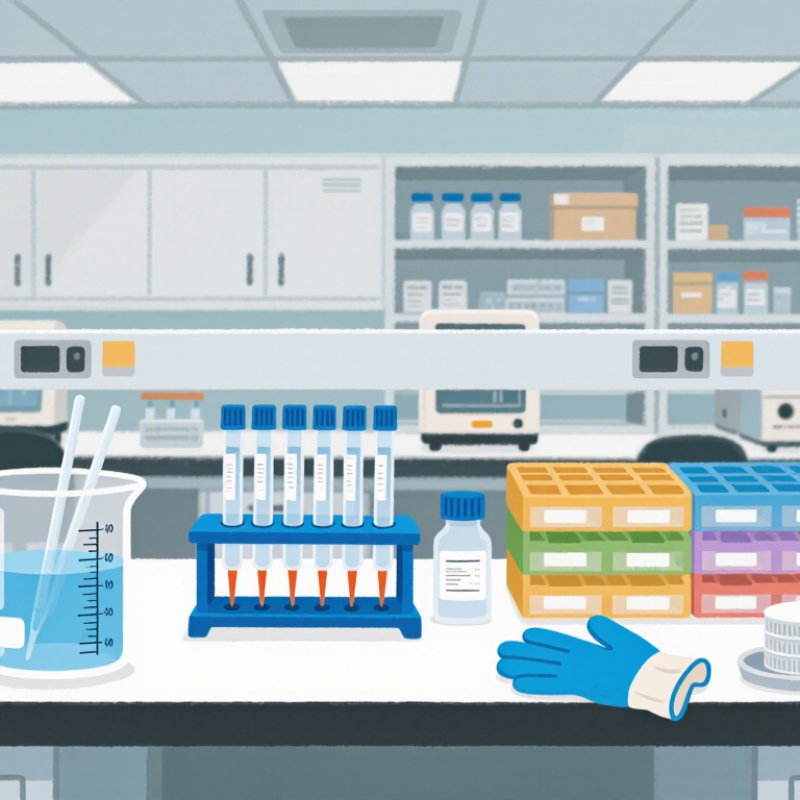
Choosing laboratory supplies starts with a clear research goal, not a crowded catalog. Define what you will measure, how often, and at which scale. A microbiology teaching lab may need sterile containers, adjustable pipettes, culture vessels, and safe waste systems. A materials lab may require balances, heat-resistant tools, desiccators, and measurement probes. Write the workflow from sample arrival to data recording. This exposes hidden needs, such as temperature control, contamination prevention, or repeated sampling. It also prevents buying equipment that looks advanced but rarely supports daily work.
Tips: Build a supply list around each procedure. Record sample volume, chemical compatibility, accuracy, storage temperature, and expected usage. Ask staff to test critical items with representative samples. Check calibration records, product specifications, cleaning instructions, and available replacement parts. Keep a small reserve for consumables, but avoid excessive stock. Expiry dates can turn savings into waste. I once underestimated labeling needs; the experiment ran smoothly, but sample tracking became needlessly difficult. Review the list with a safety officer or experienced technician before purchase.
Reliable selection also depends on evidence. Compare specifications against your protocol, not advertising language. Confirm material compatibility with solvents, heat, pressure, and repeated cleaning. For quantitative work, choose suitable tolerances and plan routine verification. Keep purchase records, lot information, inspection dates, and maintenance notes. These details support traceability when results seem inconsistent. Some requirements may remain uncertain during early planning. Mark them clearly and revisit them after pilot work. A practical list is never perfect. It should improve as your methods reveal what the laboratory truly needs.
How to Choose the Best Science Laboratory Supplies?
Supply quality begins with evidence, not appearance. Check the lot number, certificate of analysis, expiry date, and stated measurement tolerance. ISO/IEC 17025:2017 emphasizes competent testing, traceability, and technically valid results. These details matter because a slightly inaccurate pipette can distort an entire data set. A review in Clinical Chemistry reported that preanalytical problems represent roughly 46–68% of laboratory errors. Poor containers, contamination, and unsuitable handling can contribute to this risk.
Safety standards should match the task and facility. For general laboratory work, review relevant ISO, ASTM, OSHA, and GHS requirements. The WHO Laboratory Biosafety Manual, 4th edition, recommends risk assessment before selecting equipment or consumables. Look for secure closures, readable labels, temperature limits, and documented cleaning instructions. A certificate alone is not enough. Its scope may not cover your exact application.
Material compatibility requires practical testing. Compare chemicals, concentrations, temperatures, and exposure times against the supplier’s resistance data. Glass, polypropylene, fluoropolymers, and stainless steel behave differently with solvents, acids, and biological samples. Adsorption and extractables can quietly affect sensitive analyses. I would test a small batch first, using the real sample matrix. Supplier charts can be incomplete. That is an uncomfortable detail, but it deserves attention. Record swelling, discoloration, leakage, and mass changes before approving a larger purchase.
Evaluate supply quality, safety standards, and material compatibility before purchasing or using laboratory equipment.
The chart uses generalized chemical-resistance ratings from 1 (poor compatibility) to 5 (excellent compatibility) for common laboratory materials. Actual performance depends on concentration, temperature, exposure time, and mechanical stress. Always verify the supplier's technical documentation and safety information before use.
Check dimensional accuracy, traceability, calibration status, cleanliness, and lot-to-lot consistency.
Review applicable requirements such as ISO 17025, ISO 15189, ASTM methods, and chemical safety documentation.
Select glass, polypropylene, HDPE, or PTFE according to the chemical, temperature, and exposure conditions.
How to Choose the Best Science Laboratory Supplies?
Choosing laboratory supplies requires more than comparing prices. Equipment type should match the experiment, sample volume, and working environment. Glassware suits visual inspection and chemical resistance, while plasticware offers lower breakage risk and easier disposal. For temperature-sensitive work, select an incubator with stable control, clear displays, and independent verification.
Features should support accurate daily use. Look for adjustable settings, readable measurements, replaceable parts, and simple cleaning procedures. A centrifuge needs balanced operation, controlled speed, and a lid that locks securely. A balance should resist vibration and provide repeatable readings. Small details matter.
Durability is not only about strong materials. Check seals, hinges, cables, coatings, and moving components. Ask how the equipment performs after repeated cleaning and long operating cycles. Stainless steel may withstand frequent use, but unsuitable chemicals can still damage it. Performance claims should be supported by calibration records, test data, or recognized quality procedures. I once focused too much on maximum capacity and overlooked stability at low volumes. That mistake made the cheaper option more expensive over time.
Compare equipment under realistic conditions. Test it with the same sample volume, temperature range, and workload used in your laboratory. Record noise, recovery time, measurement variation, and maintenance needs. Staff feedback is valuable because awkward controls often cause avoidable errors. Perfect equipment rarely exists. A careful choice balances performance, serviceability, durability, and the limits of your actual workflow.
| Equipment Type | Primary Function | Common Materials | Typical Capacity or Range | Typical Accuracy or Performance | Durability Considerations | Recommended For | Key Selection Factors |
|---|---|---|---|---|---|---|---|
| Beaker | Mixing, heating, dissolving, and approximate volume handling | Borosilicate glass or polypropylene | 10 mL to 20 L | Graduations are generally approximate; not intended for high-precision measurement | Borosilicate glass tolerates repeated heating and many chemicals; plastic is lighter and more impact-resistant | General laboratory preparation and educational work | Spout design, heat resistance, chemical compatibility, wall thickness, and readability |
| Graduated Cylinder | Measuring liquid volume more accurately than a beaker | Borosilicate glass or polypropylene | 10 mL to 2,000 mL | Typical tolerances range from approximately ±0.1 mL for small cylinders to ±10 mL for large cylinders | Glass offers chemical resistance but can break; plastic resists impact but may scratch or deform with heat | Routine solution preparation and non-volumetric measurements | Class designation, base stability, graduation clarity, and tolerance stated by the supplier |
| Volumetric Flask | Preparing solutions to a precise fixed volume | Borosilicate glass or transparent plastic | 10 mL to 5,000 mL | Common laboratory tolerances range from approximately ±0.02 mL to ±1.2 mL, depending on capacity and class | Glass provides dimensional stability; thermal shock and mechanical impact must be avoided | Analytical chemistry, standard solutions, and calibration work | Certified tolerance, calibration temperature, stopper quality, and neck readability |
| Erlenmeyer Flask | Swirling, mixing, culturing, and heating liquids with reduced splash risk | Borosilicate glass or polypropylene | 25 mL to 10 L | Volume markings are approximate and generally less precise than volumetric glassware | Conical geometry improves handling; borosilicate versions are suitable for many heating applications | Microbiology, titration preparation, and general solution mixing | Neck size, closure compatibility, thermal resistance, and ease of cleaning |
| Analytical Balance | Measuring mass for analytical and formulation work | Metal housing, glass draft shield, ceramic or stainless-steel weighing pan | Typically 100 g to 520 g capacity | Readability commonly ranges from 0.1 mg to 1 mg; accuracy depends on calibration and environment | Sensitive to vibration, air movement, temperature changes, and overload; regular calibration is essential | Quantitative analysis and preparation of reference solutions | Readability, repeatability, draft protection, calibration method, and vibration control |
| pH Meter | Determining the acidity or alkalinity of aqueous samples | Glass or solid-state electrode, polymer body, electronic meter | Usually pH 0 to 14; temperature ranges vary by probe | Typical resolution is 0.01 pH; practical accuracy is often about ±0.01 to ±0. pH depending on calibration and sample conditions | Electrodes require proper storage, cleaning, hydration, and periodic replacement | Water testing, biological research, food analysis, and chemical experiments | Calibration points, automatic temperature compensation, electrode replaceability, and ingress protection |
| Micropipette | Dispensing small liquid volumes with controlled accuracy | Precision polymer body, stainless-steel or polymer shaft, disposable tips | Typically 0.1 µL to 10,000 µL | Accuracy and precision vary by volume; calibration is commonly verified gravimetrically | Piston and seals are wear components; resistant models tolerate autoclaving and chemical exposure better | Molecular biology, clinical testing, and reagent preparation | Volume range, ergonomic force, tip compatibility, calibration interval, and contamination control |
| Centrifuge | Separating components according to density using centrifugal force | Coated metal housing, aluminum or polymer rotor, transparent safety lid | Tube volumes commonly 0.2 mL to 1,000 mL | Speed commonly ranges from 3,000 to 30,000 rpm; relative centrifugal force depends on rotor radius | Rotor fatigue, corrosion, imbalance, and correct maintenance strongly affect service life and safety | Cell separation, nucleic-acid preparation, and sample clarification | Maximum RCF, rotor capacity, temperature control, imbalance detection, and lid-locking system |
| Hot Plate Stirrer | Heating and magnetically stirring liquid samples | Ceramic-coated or aluminum heating surface, metal housing, magnetic drive | Surface temperatures commonly up to 300–550 °C; stirring speeds often up to 1,500–2,000 rpm | Temperature stability and uniformity depend on sensor placement, vessel type, and load | Ceramic surfaces resist many chemicals but can crack from impact or thermal shock | Controlled reactions, dissolution, buffer preparation, and evaporation support | Temperature feedback, stirring torque, surface compatibility, overload protection, and cleaning access |
| Optical Microscope | Magnifying and observing cells, tissues, particles, and microorganisms | Metal frame, optical glass lenses, polymer or metal stage components | Common objective magnifications: 4×, 10×, 40×, and 100× oil immersion | Resolution is limited by wavelength and numerical aperture; practical light microscopes resolve features around 0.2 µm under suitable conditions | Optics require dust-free storage; mechanical stages and focusing systems benefit from careful handling | Biology, materials inspection, education, and routine quality control | Numerical aperture, illumination quality, working distance, ergonomic controls, and camera compatibility |
Note: Performance ranges are typical industry values and may vary according to equipment class, calibration, operating conditions, sample properties, and applicable laboratory standards.
Choosing the best science laboratory supplies starts with evaluating the supplier, not just the product list. Ask how long the supplier has served laboratories and whether technical support is available after purchase. Request clear specifications, material details, batch information, and replacement procedures. Certifications should match the product’s intended use. For example, quality management certification can show controlled processes, while calibration records support measurement reliability. Do not accept vague certificates. Verify issuing organizations and certificate dates.
Pricing needs a wider view. Compare unit costs, shipping fees, taxes, minimum order quantities, and replacement terms. A cheaper item may create hidden costs through poor durability or inconsistent results. In a teaching laboratory, repeated use can expose weak packaging quickly.
Delivery options also matter. Check stock status, estimated dispatch time, tracking, and temperature requirements when relevant. Ask whether partial delivery is possible. Delays can disrupt experiments, even when the products themselves are excellent. My own checklist is not perfect, so I review past orders and supplier responses before deciding.
Tips: Request two or three written quotations. Compare identical specifications, not just prices. Check packaging photos when supplies are fragile. Confirm the delivery address carefully. Keep certification files with purchase records. Test a small quantity before placing a large order. A polite technical question can reveal more than a polished sales page.
Choosing science laboratory supplies requires more than comparing prices. Purchasing procedures should begin with a written inventory, approved specifications, and a risk-based review. The WHO Laboratory Quality Management System handbook recommends controlling equipment throughout its life cycle. Record supplier details, lot numbers, certificates, and delivery dates.
The 2023 ISO Survey recorded more than 14,000 ISO 15189 certificates worldwide, showing how widely quality systems support laboratory competence.
However, a certificate cannot replace daily judgment. I have seen small labeling errors create larger tracking problems.
Storage procedures should match each product’s hazards and stability requirements. Use clear locations, secondary containment, temperature logs, and restricted access where necessary. The WHO Laboratory Biosafety Manual, 4th edition, emphasizes risk assessment before selecting controls. Storage labels should show opening dates, expiry dates, and disposal instructions.
Maintenance needs a schedule, not a memory. Track calibration, cleaning, filter changes, software updates, and service findings in one accessible record.
The 2021 WHO and ILO joint estimates reported 2.9 million work-related deaths globally, reinforcing the value of preventive controls, even in low-risk work areas.
Tips: Keep a small quarantine shelf for damaged, expired, or unidentified supplies. Check refrigerators with an independent thermometer. Review usage every quarter.
Avoid ordering large quantities simply because discounts look attractive. Replacement rules should define warning signs, maximum service age, spare-part availability, and approval responsibilities.
A failed repair decision may waste more time than a planned replacement.
Review the procedure after incidents, near misses, and repeated stock discrepancies.
2106 N Glassell St, Orange, CA 92865
(714)-754-6669 | sale@site_be823a56-9df9-438e-acac-cd7d504ea0ad
Monday: 8:00 AM – 4:30 PM
Tuesday: 8:00 AM – 4:30 PM
Wednesday: 8:00 AM – 4:30 PM
Thursday: 8:00 AM – 4:30 PM
Friday: 8:00 AM – 4:30 PM