Top 10 Safety Cabinet Laboratory Options for Global Buyers
Choosing a Safety Cabinet Laboratory requires more than comparing prices, colors, or storage capacity. Global buyers need dependable protection, practical maintenance, and clear evidence of quality. A cabinet may look impressive online, yet its hinges, seals, ventilation points, and spill-retention tray reveal its real value.
This guide examines ten Safety Cabinet Laboratory options for different research environments. It considers chemical compatibility, fire resistance, airflow control, shelving strength, access security, certification evidence, and after-sales support. The details matter. A poorly fitted door can leave a visible gap. An overloaded shelf can bend quietly. Small weaknesses become serious during daily laboratory work.
The late process-safety expert Trevor Kletz famously warned, “If you think safety is expensive, try ignorance.” His statement remains relevant for laboratory purchasing decisions. A lower initial price may conceal difficult installation, unavailable replacement parts, or unclear testing records. That said, no single cabinet suits every laboratory. Buyer expectations, facility design, stored materials, and local requirements can differ considerably.
This overview aims to support careful evaluation, not replace professional risk assessment. Readers should verify manufacturer documentation and consult qualified laboratory-safety specialists before purchase. We also acknowledge an imperfect reality: product information is not always presented consistently across markets. Some specifications require closer questioning. Practical experience still matters.
For global buyers, the strongest option balances documented performance with everyday usability. It should protect materials, support safe routines, and remain serviceable after delivery. The following selection offers a clearer starting point for that decision.
Types of Laboratory Safety Cabinets and Their Core Functions
Top 10 Safety Cabinet Laboratory Options for Global Buyers
Types of Laboratory Safety Cabinets and Their Core Functions
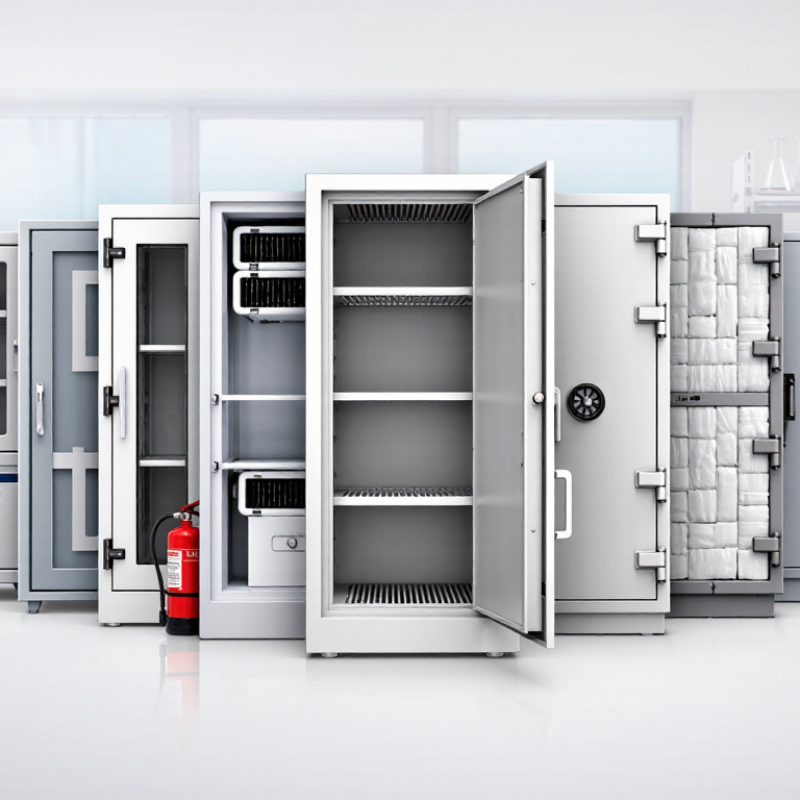
Laboratory safety cabinets serve different hazards, so selection should begin with the material and work process. A chemical fume hood captures vapors through external exhaust. A ductless hood uses filters, but its capacity depends on chemical compatibility and replacement schedules. Flammable-liquid cabinets control ignition exposure during storage. Corrosive cabinets protect containers from damaging leaks, while acid cabinets require suitable liners and hardware. Powder enclosures reduce airborne particles during weighing and transfer. Gloveboxes isolate moisture-sensitive or hazardous materials in a controlled atmosphere.
Biological work needs a different approach. Class I biological safety cabinets protect personnel and the room from aerosols. Class II models add product protection through filtered, directional airflow. Class III cabinets provide a sealed workspace for higher-containment procedures. Clean benches protect samples, not operators, and should not replace a biological safety cabinet. That distinction is often missed.
A reliable purchasing review checks airflow, filter performance, noise, workspace dimensions, and maintenance access. Certification should follow recognized local or international laboratory requirements. Ask whether replacement filters are available in the destination country. Check the alarm response, sash position, and emergency power plan. Small details matter. A cabinet may appear suitable yet fail when solvents, heat, or large equipment changes the airflow pattern. Even experienced teams can overlook user behavior, especially when loading becomes crowded. Reassess the cabinet after installation, not only during procurement.
Key Safety Standards for Buyers in Different Regions
Choosing among the top 10 safety cabinet options requires more than comparing capacity and price. Regional standards can change the acceptable design, testing method, and installation details. In the United States, buyers often review OSHA requirements, NFPA guidance, and relevant ANSI standards. European purchasers should check EN 14470-1 for flammable storage cabinets. The United Kingdom may require additional workplace and fire-safety guidance. Australia and New Zealand commonly refer to AS/NZS 2243.10. Always confirm the current rules with a qualified local safety officer.
Tips: Check the cabinet’s certification documents, door-closing system, ventilation guidance, and fire-resistance rating. Measure the laboratory doorway first. Labels matter. Keep chemical compatibility in mind, not only volume. A cabinet suitable for solvents may be unsuitable for corrosives or oxidizers. Ask whether testing covers the exact cabinet type, not merely the manufacturer’s general product range.
Installation also affects compliance. A cabinet placed beside a heat source, blocked emergency route, or poorly ventilated corner can create practical risks. Regional authorities may require separation distances, spill containment, grounding, or special signage. Buyers should record inspection dates and train users on closing doors after access. Paperwork can look complete, yet field conditions may tell another story. I have seen selection decisions focus heavily on storage capacity while ignoring shelf loading and future chemical changes. A more reliable approach is to match the cabinet with the laboratory’s substances, room layout, climate, and inspection expectations.
Top 10 Laboratory Safety Cabinet Options and Their Uses
Laboratory safety cabinets differ by hazard, airflow, and work purpose. Class I cabinets protect personnel and rooms during work with low-to-moderate biological hazards. They do not protect the product. Class II cabinets provide personnel, product, and environmental protection through filtered vertical airflow. They suit microbiology, cell culture, and diagnostic preparation. CDC and NIH’s Biosafety in Microbiological and Biomedical Laboratories, 6th edition, recommends cabinet selection based on risk assessment, not equipment appearance.
Class II Type A2 cabinets support many routine procedures and usually recirculate filtered air indoors. Type B2 cabinets exhaust all air externally and may suit volatile toxic chemicals used with biological materials. They demand dedicated exhaust systems and stronger facility controls.
Class III cabinets offer a sealed working environment for higher-containment activities, using glove ports and pass-through chambers. They are expensive, slower to operate, and unsuitable for casual installation. The WHO Laboratory Biosafety Manual, fourth edition, stresses layered controls, including engineering, procedural, and personal protection measures.
For chemical vapors alone, a ducted laboratory fume hood is generally more appropriate than a biological safety cabinet. Clean benches protect samples only, not operators, and are often misunderstood. The 2022 WHO report on healthcare waste management identifies about 15% of healthcare waste as hazardous, reinforcing careful segregation and containment. Certification should follow relevant requirements, such as NSF/ANSI 49 or EN 12469, with airflow testing and filter checks. Real facilities sometimes buy the largest cabinet available. That can be a mistake. Noise, exhaust capacity, service access, and operator reach deserve equal attention.
How to Compare Cabinet Capacity, Materials, and Protection Levels
Top 10 Safety Cabinet Laboratory Options for Global Buyers
Capacity should match daily use, not optimistic purchasing plans. In the United States, OSHA 29 CFR 1910.106 permits cabinets to hold up to 60 gallons of Category 1, 2, and 3 flammable liquids. Category 4 liquids may reach 120 gallons. OSHA also limits storage to three cabinets in one storage area. These figures are not universal. NFPA 30 and local fire codes may apply different conditions. A cabinet filled to the door can become difficult to inspect and dangerously heavy.
Material selection follows the chemical hazard. Powder-coated steel suits many flammable-liquid applications. Polyethylene resists several corrosive chemicals better. Stainless steel may support cleaner environments, but it is not automatically compatible with every chemical. Check the manufacturer’s resistance chart and the SDS, not only a product photograph. For fire protection, EN 14470-1 identifies tested resistance classes from 15 to 90 minutes. FM Global Data Sheet 7-83 also stresses separation, ventilation, and spill control. A higher rating costs more, yet “maximum protection” can still be poorly matched.
Tips: Compare internal capacity, shelf load, sump volume, door closure, grounding options, and certification together. Leave working space around containers. Recheck assumptions with a qualified safety officer; cabinet comparisons are often less simple than they appear.
Top 10 Safety Cabinet Laboratory Options for Global Buyers
Comparison of representative laboratory safety cabinet configurations by storage capacity, steel construction thickness, and fire-protection rating. Higher protection ratings generally support longer emergency response time, while capacity and material thickness should be matched to the application and local certification requirements.
Data represents realistic non-branded market configurations commonly used for flammable-liquid and chemical storage. Fire ratings shown are typical 15-, 30-, 60-, and 90-minute classes; buyers should verify applicable standards, testing certificates, ventilation requirements, and regional regulations before purchase.
Purchasing Factors for Installation, Maintenance, and Global Support
Top 10 Safety Cabinet Laboratory Options for Global Buyers
Purchasing Factors for Installation, Maintenance, and Global Support
When comparing the top ten safety cabinet laboratory options, installation deserves careful attention. Measure the doorway, floor load, and service clearance before ordering. Many failures begin with crowded rooms, uneven floors, or missing ventilation routes. Confirm the cabinet’s intended use, fire rating, construction material, and compatibility with stored substances. Request independent test reports and current technical drawings. Paperwork matters.
Maintenance planning should be practical, not decorative. Set inspection intervals for hinges, seals, shelves, alarms, grounding points, and corrosion. Keep a signed service log with dates, findings, and replacement parts. For cabinets with ventilation, check airflow after relocation or renovation. Do not assume a quiet fan is a healthy fan. Local technicians need clear procedures, calibrated instruments, and access to approved components. One weakness remains common: buyers often budget for purchase, but not ownership.
Global support can determine whether a cabinet remains reliable after installation. Ask about multilingual manuals, remote troubleshooting, spare-part availability, training, and response times. Confirm who handles warranty work in your country. Time zones matter. Support promises should appear in written service terms, not only sales conversations. During supplier evaluation, request references from laboratories with similar climate and operating hours. Humidity, dust, voltage variation, and shipping damage can expose weak planning. A technically compliant cabinet may still disappoint when local support is slow. Leave room to revise the plan.