Top 10 Medical Laboratory Supplies for Global Buyers?
Choosing the right Medical Laboratory Supplies affects diagnostic accuracy, workflow efficiency, and patient safety across international markets. Global buyers often compare more than prices. They examine product quality, documentation, storage conditions, supplier responsiveness, and delivery reliability.
This guide introduces ten essential categories used in hospitals, clinics, research centers, and private laboratories. These include specimen containers, pipette tips, centrifuge tubes, gloves, microscopes, analyzers, reagents, and safety equipment. Each category serves a specific purpose. A poorly sealed tube can compromise a specimen before testing begins. Inconsistent pipette tips may affect a small-volume result. Details matter.
Reliable purchasing requires evidence. Buyers should review batch information, certificates, technical specifications, expiration dates, and applicable quality standards. Suppliers with transparent traceability are easier to evaluate and support. Regional import requirements also deserve careful attention. Requirements vary between countries, and assumptions can create expensive delays.
No list is perfect. Laboratory needs differ.
A small diagnostic clinic may prioritize compact analyzers and disposable supplies. A university laboratory may need flexible equipment for changing experiments. Experienced procurement teams also assess training, calibration support, replacement parts, and after-sales communication. These practical details often become visible only after installation.
The following overview is designed to help international buyers build a safer, more informed purchasing strategy. It focuses on common laboratory needs, dependable sourcing practices, and measurable product considerations. Quality should never be judged by appearance alone. A polished package is not proof of performance.

Defining Medical Laboratory Supplies and Their Core Applications
Medical laboratory supplies are the practical tools and consumables used to collect, prepare, test, measure, and store clinical specimens. They include collection tubes, pipettes, tips, centrifuge accessories, slides, culture containers, reagents, protective equipment, and temperature monitoring devices. Each item supports a specific stage of laboratory work. Some supplies are reusable, while others must be discarded after one procedure.
Their core applications begin with safe specimen collection. Tubes and swabs help preserve sample quality before testing. Pipettes and tips support accurate liquid transfer. Centrifuge products separate serum or plasma from whole blood. Slides and staining materials assist microscopic examination. Reagents enable chemical, immunological, or molecular analysis. Storage containers and monitoring devices protect samples during transport and refrigeration. Small errors matter here.
From my experience reviewing laboratory procurement requirements, reliable supplies need more than attractive pricing. Buyers should check material compatibility, sterility status, shelf life, lot traceability, packaging integrity, and performance documentation. Equipment-related items also require clear specifications and routine maintenance guidance. Quality systems should align with applicable local regulations and recognized laboratory practices. A supplier’s technical support can reveal practical limitations before purchase. No category list is perfect. A product suitable for a hospital laboratory may perform poorly in a teaching facility or a high-volume testing center. Global buyers should compare the intended workflow, specimen type, storage conditions, and staff training needs before approving an order.
| No. | Medical Laboratory Supply | Product Category | Typical Specifications and Materials | Core Laboratory Applications | Key Purchasing Considerations |
|---|---|---|---|---|---|
| 1 | Laboratory Microscopes | Optical Laboratory Equipment | Compound optical systems commonly use 4×, 10×, 40×, and 100× objectives, with a total magnification of up to approximately 1,000×. Oil-immersion objectives are used for high-resolution work. | Examination of stained blood films, urine sediment, microorganisms, tissue sections, and cell morphology. | Verify optical quality, illumination type, mechanical stability, objective compatibility, service support, and electrical compatibility with the destination market. |
| 2 | Adjustable Micropipettes | Liquid Handling Equipment | Common volume ranges include 0.1–2.5 µL, 2–20 µL, 20–200 µL, and 100–1,000 µL. Disposable tips are generally made from polypropylene. | Accurate transfer of samples, reagents, controls, and nucleic-acid or immunoassay components. | Check accuracy and precision specifications, calibration requirements, ergonomics, autoclavable components, tip compatibility, and ISO 8655-related documentation where applicable. |
| 3 | Centrifuge Tubes | Sample Collection and Processing Consumables | Common formats include 1.5–2.0 mL microcentrifuge tubes and 15 or 50 mL conical tubes. Polypropylene is widely used because of its chemical resistance and low-temperature tolerance. | Separation, concentration, mixing, storage, and transport of blood fractions, urine, cell suspensions, and molecular biology samples. | Confirm maximum relative centrifugal force, leak resistance, cap design, sterility status, chemical compatibility, temperature range, and lot traceability. |
| 4 | Vacuum Blood Collection Tubes | Specimen Collection Consumables | Tubes are available with different additives, including EDTA for hematology, sodium citrate for coagulation testing, and clot activator or gel for serum preparation. | Collection and preservation of venous blood specimens for hematology, clinical chemistry, coagulation, and serology testing. | Match additive type and fill volume to the intended test, and verify tube material, expiration date, vacuum stability, closure integrity, sterility, and applicable regulatory requirements. |
| 5 | Microscope Slides and Coverslips | Microscopy Consumables | Standard microscope slides are commonly made from optical glass and measure approximately 25 × 75 mm. Coverslips are thin glass pieces available in several thickness classes. | Preparation and examination of blood smears, cytology samples, tissue sections, and microbiological specimens. | Assess optical clarity, dimensional consistency, surface cleanliness, edge finish, frosted labeling area, packaging protection, and compatibility with automated staining systems. |
| 6 | Benchtop Clinical Chemistry Analyzers | Diagnostic Testing Equipment | These systems may use photometric, colorimetric, or ion-selective measurement principles. Typical test menus include glucose, urea, creatinine, enzymes, and electrolytes. | Quantitative analysis of serum, plasma, urine, and other approved specimens in clinical chemistry laboratories. | Review analytical measuring range, throughput, sample and reagent requirements, calibration procedures, quality-control functions, connectivity, and local regulatory clearance. |
| 7 | Laboratory Incubators | Temperature-Controlled Equipment | General-purpose laboratory incubators commonly maintain temperatures near ambient to approximately 60 °C, with thermostatic control and forced-air or natural-convection options. | Controlled incubation of microbiological cultures, biochemical reactions, cell-related procedures, and temperature-sensitive test materials. | Verify temperature uniformity, recovery time, internal volume, alarm functions, shelf configuration, calibration capability, power requirements, and cleaning compatibility. |
| 8 | Biological Safety Cabinets | Containment and Laboratory Safety Equipment | Class II cabinets use inward airflow and high-efficiency particulate filtration to protect personnel, products, and the laboratory environment during appropriate microbiological procedures. | Safe handling of potentially infectious clinical specimens, cultures, and other biological materials that require controlled containment. | Confirm cabinet classification, airflow performance, filter certification, noise level, work-zone dimensions, installation requirements, and compliance with applicable biosafety standards. |
| 9 | Laboratory Refrigerators and Freezers | Cold-Chain Storage Equipment | Laboratory refrigerators commonly operate around 2–8 °C. Dedicated freezers may operate at approximately −20 °C, while ultra-low-temperature models commonly operate near −80 °C. | Storage of reagents, calibrators, controls, specimens, vaccines, enzymes, and other temperature-sensitive laboratory materials. | Evaluate temperature uniformity, continuous monitoring, alarm and backup features, storage capacity, door configuration, defrost method, energy requirements, and cold-chain documentation. |
| 10 | Laboratory Personal Protective Equipment | Personal Safety Consumables | Common items include nitrile gloves, fluid-resistant laboratory coats, protective eyewear, face shields, and disposable masks. Selection depends on chemical, biological, and splash hazards. | Reduction of exposure to infectious materials, chemical splashes, aerosols, contaminated surfaces, and biological specimens. | Check material compatibility, glove thickness and sizes, tested protection claims, packaging and sterility status where needed, user comfort, and applicable occupational safety requirements. |
Related Posts
-
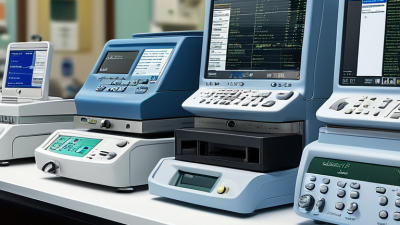
10 Tips for Buying Medical Laboratory Products?
-
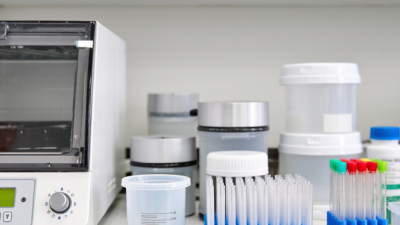
China Best Medical Laboratory Products Manufacturer?
-

2026 How to Choose the Best Medical Laboratory Products for Your Needs?
-
Top Medical Laboratory Machines for Global Buyers?
-

2026 Best Medical Laboratory Supplies for Quality and Efficiency
-
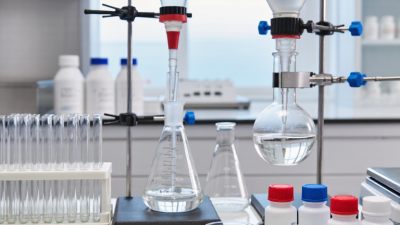
China Best Science Laboratory Supplies Manufacturers?