China Top Other Laboratory Equipment Suppliers 2026
China’s laboratory market is expanding beyond microscopes, centrifuges, and standard analytical systems. In 2026, buyers are also examining suppliers of Other Laboratory Equipment, including laboratory ovens, shakers, water baths, safety cabinets, sterilizers, balances, and supporting instruments.
This guide introduces leading Chinese suppliers through practical procurement criteria. These include manufacturing experience, product consistency, calibration support, material quality, customization capability, export performance, and after-sales service. A dependable supplier should provide clear specifications, traceable testing records, realistic delivery schedules, and responsive technical communication. Small details matter. A loose door seal, unstable temperature, or unclear manual can disrupt an entire workflow.
Quality expert Joseph M. Juran said, “Quality means fitness for use.” That principle remains useful when comparing laboratory equipment suppliers. The cheapest quotation may not offer the lowest operating cost. Energy consumption, replacement parts, training, warranty terms, and maintenance access deserve equal attention. Some suppliers appear strong online but provide limited evidence of factory capacity. That weakness should not be ignored.
This overview combines supplier information, product evaluation, and practical buyer experience. It does not treat marketing claims as proof. Instead, it encourages readers to request samples, audit documentation, and verify performance under actual laboratory conditions. Results may vary between models and production batches. That is worth admitting.
The selected companies are not ranked solely by size or export volume. Their relevance depends on application, budget, compliance requirements, and service expectations. By comparing these factors carefully, laboratory managers can identify more reliable partners for 2026 and reduce avoidable purchasing risks.
Definition and Scope of Other Laboratory Equipment Suppliers in China
Other Laboratory Equipment Suppliers in China: Definition and Scope
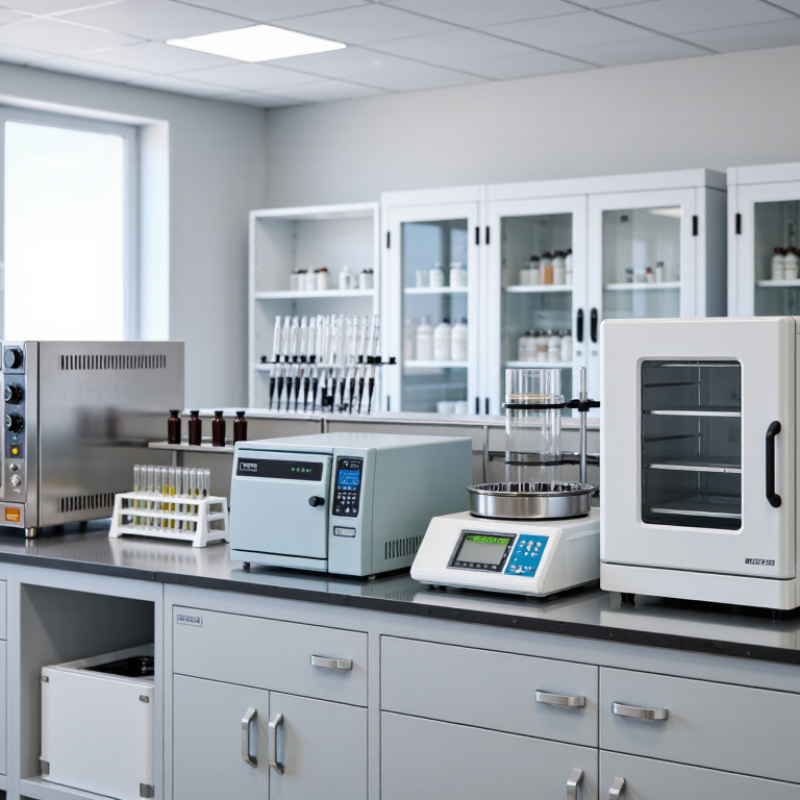
In China, “other laboratory equipment suppliers” describes companies that provide supporting tools beyond major analytical instruments. The category is broad and not perfectly fixed. It may include laboratory ovens, water baths, centrifuges, shakers, mixers, sterilizers, balances, fume hoods, clean benches, storage cabinets, and modular workstations. Some suppliers manufacture equipment directly, while others integrate products from several factories. That difference affects quality control, documentation, and service responsibility.
A reliable supplier should explain technical limits in clear language. Buyers commonly review temperature uniformity, speed stability, load capacity, material grade, noise level, and power requirements. For example, an incubator may need stable conditions at 37°C, while a fume hood requires measured airflow and suitable filter arrangements. Product drawings, test records, calibration options, installation guidance, and spare-part availability also matter. These details reveal professional experience more clearly than attractive catalog photographs.
Supplier evaluation should include factory audits, sample testing, and communication with service engineers. Check whether manuals match the delivered equipment. Ask how faults are recorded and how quickly replacement parts can arrive. A low quotation may exclude installation or validation support. That is easy to miss. Chinese suppliers can offer flexible customization, but customization may complicate maintenance and future compatibility. Buyers should therefore compare complete operating costs, not only purchase prices. Standards and export requirements also vary by destination, so technical claims need independent verification.
| Equipment Category | Definition and Scope | Typical Laboratory Use | Key Technical Parameters | Common Materials or Configurations | Relevant Evaluation or Compliance Considerations |
|---|---|---|---|---|---|
| Laboratory Balances | Non-analytical laboratory weighing equipment used for sample preparation, formulation, quality control, and routine measurement. | Weighing powders, reagents, reference materials, samples, and containers. | Readability, maximum capacity, repeatability, linearity, stabilization time, draft protection, and calibration functions. | Precision balances, analytical balances, top-pan balances, stainless-steel weighing pans, and glass draft shields. | Calibration traceability, environmental sensitivity, repeatability testing, and electrical safety requirements under applicable laboratory equipment standards. |
| Centrifuges | Equipment that separates sample components through centrifugal force and is generally classified as sample-preparation equipment. | Separating cells, precipitates, particulates, phases, or biological fractions. | Maximum relative centrifugal force, speed range, rotor capacity, temperature control, imbalance detection, and programmable operation. | Fixed-angle rotors, swing-out rotors, interchangeable adapters, sealed buckets, and refrigerated or non-refrigerated configurations. | Rotor compatibility, containment requirements, noise, balance control, maintenance records, and validation of speed and temperature. |
| Laboratory Ovens and Furnaces | Thermal equipment for drying, heating, sterilization, ashing, calcination, and controlled high-temperature treatment. | Drying glassware, conditioning samples, heat treatment, loss-on-ignition testing, and material preparation. | Temperature range, uniformity, stability, ramp rate, chamber volume, controller resolution, and over-temperature protection. | Forced-air ovens, vacuum ovens, muffle furnaces, corrosion-resistant chambers, ceramic insulation, and stainless-steel interiors. | Temperature mapping, calibration, ventilation, thermal protection, energy consumption, and suitability for combustible or volatile materials. |
| Incubators | Temperature-controlled chambers designed to maintain stable conditions for biological, microbiological, or material samples. | Cell and microbial culture, stability studies, sample conditioning, and controlled growth experiments. | Temperature uniformity, temperature stability, chamber volume, recovery time, humidity control, and alarm functions. | Natural-convection or forced-air models, stainless-steel chambers, glass inner doors, and optional humidity or carbon-dioxide control. | Contamination control, calibration at operating points, data logging, alarm management, and suitability for the intended biological application. |
| Autoclaves and Sterilizers | Steam or other validated sterilization systems used to treat laboratory media, instruments, glassware, and suitable waste. | Moist-heat sterilization, media preparation, decontamination of laboratory items, and biohazard waste treatment. | Chamber volume, temperature and pressure profile, cycle time, drying performance, load configuration, and cycle recording. | Vertical or horizontal chambers, stainless-steel pressure vessels, liquid cycles, solid cycles, and drying options. | Pressure-vessel safety, sterilization validation, biological or chemical indicators, door interlocks, and applicable national safety requirements. |
| Laboratory Water Purification Systems | Systems that produce treated water for laboratory preparation, washing, analytical work, and instrument support. | Preparing reagents and media, rinsing glassware, feeding laboratory instruments, and producing purified or ultrapure water. | Conductivity or resistivity, total organic carbon, flow rate, storage capacity, bacterial control, and filter service life. | Reverse osmosis, deionization, ultrafiltration, ultraviolet treatment, point-of-use filters, and storage tanks. | Water-quality grade required by the method, routine monitoring, filter replacement, sanitization, and documented maintenance. |
| Mixers, Shakers, and Homogenizers | Mechanical sample-preparation devices that mix, agitate, vortex, homogenize, or disperse laboratory materials. | Blending liquids, resuspending pellets, preparing suspensions, extracting analytes, and homogenizing solid or biological samples. | Speed range, orbital diameter, mixing mode, load capacity, timer, temperature capability, and torque or power control. | Vortex mixers, orbital shakers, reciprocating shakers, magnetic stirrers, overhead stirrers, and rotor-stator homogenizers. | Compatibility with sample vessels, cleanability, vibration control, chemical resistance, and repeatability of mixing conditions. |
| Fume Hoods and Local Exhaust Systems | Ventilated enclosures designed to capture and remove hazardous or irritating vapors, gases, aerosols, or particulates. | Handling volatile chemicals, corrosive reagents, toxic substances, and processes that generate laboratory fumes. | Face velocity, airflow volume, sash position, exhaust configuration, noise level, filter type, and alarm status. | Ducted chemical fume hoods, filtered enclosures, corrosion-resistant work surfaces, and vertical or horizontal sashes. | Site ventilation design, airflow verification, exhaust discharge, chemical compatibility, user protection, and periodic performance testing. |
| Biological Safety Cabinets | Primary containment equipment that protects personnel, products, and the environment during specified microbiological procedures. | Work involving biological materials, cell culture, microbiology, and activities requiring controlled airflow and filtration. | Cabinet class, airflow pattern, inflow and downflow velocity, filter efficiency, working width, noise, and alarm functions. | Class I, Class II, or Class III configurations, high-efficiency particulate air filtration, stainless-steel work zones, and motorized sashes. | Certification after installation and service, airflow testing, filter integrity testing, decontamination procedures, and correct application selection. |
| Clean Benches and Laminar-Flow Workstations | Unidirectional airflow workstations intended primarily to protect products or samples from particulate contamination. | Aseptic assembly, sterile material handling, non-hazardous sample preparation, and contamination-sensitive procedures. | Airflow direction, velocity, working-zone cleanliness, filter efficiency, noise, and work-area dimensions. | Horizontal-flow or vertical-flow designs, high-efficiency filters, stainless-steel work surfaces, and transparent side panels. | Not a substitute for biological safety cabinets; performance depends on correct room conditions, filter integrity, airflow testing, and cleaning procedures. |
| Refrigerators, Freezers, and Cryogenic Storage | Temperature-controlled storage equipment for reagents, specimens, standards, samples, and laboratory materials. | Short- and long-term storage of chemicals, biological samples, reference materials, and temperature-sensitive products. | Set-point range, temperature uniformity, recovery time, storage volume, alarm system, data logging, and backup power compatibility. | Laboratory refrigerators, low-temperature freezers, ultra-low-temperature freezers, cryogenic vessels, and monitored storage systems. | Temperature mapping, alarm response, access control, frost management, emergency planning, and compatibility with stored materials. |
| Environmental Test Chambers | Controlled chambers that reproduce defined temperature, humidity, light, or other environmental conditions for testing and storage. | Stability testing, packaging studies, material conditioning, accelerated aging, and environmental simulation. | Temperature and humidity range, uniformity, stability, chamber volume, lighting conditions, and programmable profiles. | Temperature chambers, humidity chambers, photostability chambers, climatic chambers, and walk-in configurations. | Sensor calibration, chamber mapping, test-profile traceability, condensation control, and documented recovery performance. |
| Sample Preparation Equipment | Equipment used to reduce particle size, digest, extract, concentrate, filter, evaporate, or otherwise prepare samples before analysis. | Grinding, milling, digestion, solvent extraction, filtration, evaporation, and concentration of solid or liquid samples. | Throughput, particle-size reduction, temperature control, solvent compatibility, extraction recovery, and contamination risk. | Grinders, mills, digestion blocks, extraction systems, rotary evaporators, vacuum concentrators, and filtration units. | Material compatibility, cross-contamination control, cleaning validation, fume management, and reproducibility of preparation conditions. |
| Laboratory Washing and Cleaning Systems | Automated or semi-automated systems for cleaning, rinsing, drying, and decontaminating reusable laboratory items. | Cleaning glassware, laboratory utensils, trays, vessels, and selected reusable components. | Chamber capacity, water temperature, spray pressure, cycle selection, detergent dosing, rinsing quality, and drying method. | Laboratory glassware washers, ultrasonic cleaners, rinse stations, drying cabinets, and modular loading systems. | Cleaning effectiveness, detergent compatibility, final-rinse quality, thermal disinfection requirements, and maintenance of spray and drainage systems. |
| Laboratory Monitoring and Safety Devices | Instruments and systems that monitor laboratory conditions, equipment status, environmental parameters, or safety events. | Monitoring temperature, humidity, pressure, differential pressure, air quality, leaks, access, and equipment alarms. | Sensor accuracy, measurement range, data interval, alarm limits, communication method, battery life, and data-retention capacity. | Standalone data loggers, networked monitoring systems, pressure gauges, leak detectors, and alarm panels. | Calibration interval, alarm escalation, audit trails, cybersecurity for connected systems, backup power, and documented response procedures. |
| Supplier Capability Dimensions | Non-brand criteria used to assess suppliers of the above equipment in the Chinese laboratory-equipment market. | Equipment selection, configuration, installation, commissioning, training, preventive maintenance, and after-sales service. | Technical documentation, customization capability, delivery lead time, spare-parts availability, service response, and warranty terms. | Standard products, modular systems, engineered-to-order equipment, localized interfaces, and integration with laboratory utilities. | Quality-management certification, product test records, calibration support, electrical and pressure safety documentation, and compliance with applicable Chinese and international requirements. |
Related Posts
-
What Are the Top Types of Other Laboratory Equipment?
-
Why Choose Science Laboratory Equipment for Your Lab?
-
What Are the Top Instruments for Laboratory Use?
-
China Top 10 Other Laboratory Apparatus Suppliers
-
China Top 10 Basic Laboratory Apparatus Manufacturers?
-
Top Medical Laboratory Devices for Global Buyers in 2026?