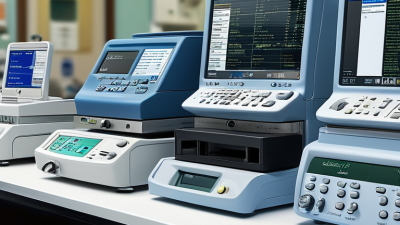
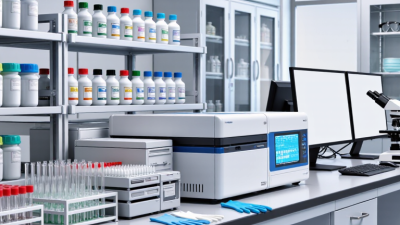
Choosing the right Medical Laboratory Products in 2026 requires more than comparing prices or reading supplier brochures. Global buyers need dependable instruments, verified reagents, clear documentation, and practical after-sales support. A compact hematology analyzer may suit a rural clinic, while a high-throughput model may better serve a national reference laboratory.
“Laboratories are the backbone of public health,” says Dr. John Nkengasong, a recognized leader in global laboratory systems. His view reflects a central procurement truth: product quality affects testing accuracy, clinical decisions, and public confidence. This guide examines analyzers, diagnostic kits, centrifuges, microscopes, laboratory consumables, safety equipment, and digital laboratory systems through that wider lens.
Performance matters.
Yet performance data needs context. A product with excellent specifications may struggle with unstable electricity, limited maintenance skills, or difficult shipping conditions. Buyers should examine calibration requirements, internal quality controls, operating temperatures, spare-part access, and training provisions. Compliance with applicable standards, including ISO 15189-related quality practices, should also be confirmed through reliable documentation.
The selection process is not perfect. A scoring table can overlook staff experience, local workload, or unexpected downtime. That weakness deserves attention. The best choice is rarely the most advanced product. It is the product that remains accurate, serviceable, and safe in its real working environment. This 2026 overview helps international buyers compare evidence, identify practical risks, and build more resilient laboratory purchasing decisions.
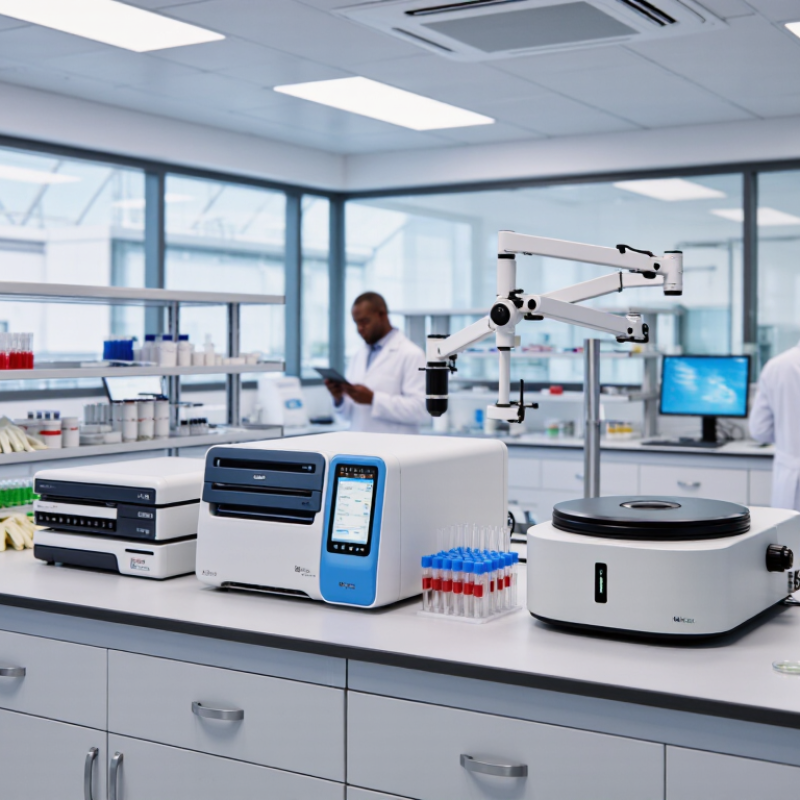
2026 Best Medical Laboratory Products for Global Buyers
Medical laboratory products fall into several practical categories. Instruments include analyzers, centrifuges, microscopes, and automated sample processors. They support chemistry, hematology, immunoassay, microbiology, and pathology workflows. Consumables include tubes, pipette tips, slides, culture media, and protective laboratory supplies. Small details matter. A poor tube seal can damage an otherwise reliable test.
Molecular systems detect genetic material from respiratory, blood, and infectious disease samples. Immunoassay products measure hormones, antibodies, and disease markers. Clinical chemistry analyzers assess glucose, enzymes, electrolytes, and kidney indicators. Point-of-care devices shorten testing time in emergency rooms and rural clinics. Grand View Research estimated the global in vitro diagnostics market at over USD 100 billion in 2023, with continued growth expected through 2030. The estimate varies by product definition and regional coverage.
Quality control materials, calibrators, barcode systems, and cold-chain equipment deserve equal attention. They help laboratories maintain traceability from collection to reporting. The World Health Organization’s Essential Diagnostics List emphasizes selecting tests according to local disease burden and health-system capacity. This is often overlooked. A sophisticated analyzer may underperform where electricity, training, or reagent storage is unstable. Global buyers should compare accuracy, throughput, operating temperature, maintenance needs, and documentation. Reports from MarketsandMarkets also identify automation and molecular testing as major growth areas. Still, market forecasts are not guarantees. Local validation remains necessary before routine clinical use.
2026 Best Medical Laboratory Products for Global Buyers
Key Performance Standards for Choosing Laboratory Equipment
Medical laboratory equipment should be judged by measurable performance, not attractive specifications. Accuracy shows how close a result is to the accepted value. Precision shows whether repeated tests remain consistent. Both matter. A system that produces fast but unstable results can create costly clinical decisions. Buyers should request verification data, calibration records, and performance results from realistic sample types.
Daily workflow also reveals important differences. Check the instrument’s throughput during peak hours, not only its advertised capacity. Review sample loading, reagent stability, temperature control, and contamination prevention. Clear alarms and simple maintenance can reduce operator error. Short training videos help, but they cannot replace complete manuals and practical instruction. I would also inspect the waste container, cable layout, and cleaning access. Small design flaws become large problems after months of use.
Reliable purchasing requires evidence beyond a sales quotation. Ask for traceability documents, quality-control procedures, cybersecurity information, and service response terms. Equipment should support applicable local regulations and recognized laboratory quality systems, including ISO 15189 where relevant. Confirm voltage, room temperature, humidity limits, and replacement-part availability before shipment. These details are easy to overlook. They should not be. A lower purchase price may become expensive when calibration is difficult or technical support is distant. Even strong specifications deserve independent verification, because published performance may not match every laboratory’s workload.
In 2026, global buyers need medical laboratory products that support accurate clinical testing and efficient research workflows. Core equipment includes automated analyzers, benchtop centrifuges, calibrated pipettes, microplate readers, and temperature-controlled storage. Each item should match the laboratory’s testing volume, sample types, and available technical support. A compact centrifuge may suit a small clinic, while a high-throughput analyzer can reduce delays in regional laboratories. Details matter.
Consumables are equally important. Sterile tubes, filtered tips, specimen containers, slides, cuvettes, and validated reagents help protect sample integrity. Quality controls and calibration materials allow technicians to detect drift before it affects patient results. Buyers should review lot traceability, shelf life, storage temperatures, and documentation before placing orders. Clear instructions reduce training time and support consistent handling across different facilities. Still, documentation can be incomplete. Careful verification remains necessary.
Research teams may require cell culture supplies, nucleic acid extraction kits, laboratory balances, and secure data systems. Clinical laboratories often prioritize workflow automation, barcode tracking, and instruments with serviceable components. Products should meet applicable safety, quality, and regulatory requirements in their destination markets. Experienced procurement teams also assess installation, maintenance response, replacement parts, and user training. No workflow is flawless. A practical evaluation should include real bench conditions, such as limited space, unstable power, humid storage rooms, or staff shortages. These factors often reveal weaknesses that product brochures overlook.
| Product Category | Core Product | Primary Workflow | Typical Technical Specifications | Representative Sample Type | Key Performance or Purchasing Criteria | Relevant Standards and Quality Considerations | Recommended Buyer Profile |
|---|---|---|---|---|---|---|---|
| Hematology | Automated 5-Part Differential Hematology Analyzer | Complete blood count, white-cell differential, anemia screening and routine hematology | Approximately 60–120 samples per hour; 20–30 or more reportable parameters; typical whole-blood aspiration of about 15–100 µL depending on sampling mode | EDTA-anticoagulated whole blood | Flagging capability, low carryover, automated reticulocyte option, closed-tube sampling, barcode identification and onboard quality-control charts | ISO 15189IEC 61010-1IEC 61326-1 | Hospitals, diagnostic laboratories, health-screening centers and mid-volume clinical laboratories |
| Clinical Chemistry | Random-Access Clinical Chemistry Analyzer | Routine biochemical testing for metabolic, renal, hepatic and lipid profiles | Commonly 200–800 photometric tests per hour; reagent cooling generally between 2–8°C; reaction volumes commonly in the low hundreds of microliters | Serum, plasma and urine | Linear measurement range, onboard reagent stability, sample clot detection, automatic dilution, ion-selective electrode availability and calibration traceability | ISO 15189ISO 17511IEC 61010-1 | General hospitals, centralized laboratories and high-throughput diagnostic networks |
| Immunodiagnostics | Automated Chemiluminescent Immunoassay Analyzer | Hormone, tumor-marker, infectious-disease and cardiac-marker testing | Typical throughput of approximately 100–400 tests per hour; refrigerated reagent storage commonly 2–8°C; continuous or random-access loading on many systems | Serum, plasma and selected whole-blood applications | Analytical sensitivity, lot-to-lot consistency, calibration frequency, interference testing, turnaround time and reflex-testing support | ISO 15189ISO 18113IEC 61326-1 | Clinical laboratories requiring automated endocrine, infectious-disease and oncology testing |
| Molecular Diagnostics | Real-Time PCR System | Nucleic-acid amplification, pathogen detection, genotyping and quantitative molecular assays | Common formats include 48- or 96-well blocks; optical detection across multiple fluorescence channels; temperature control commonly up to approximately 100°C | Extracted DNA or RNA from swabs, blood, plasma, urine, tissue or other validated matrices | Uniform thermal performance, fluorescence sensitivity, contamination control, open or closed assay format, melt-curve capability and software audit trails | ISO 15189ISO 20395IEC 61010-1 | Clinical molecular laboratories, public-health laboratories, academic research and translational medicine teams |
| Molecular Sample Preparation | Automated Nucleic-Acid Extraction System | Purification of DNA and RNA before PCR, sequencing or other molecular workflows | Typical batch capacity of 12–96 samples; magnetic-bead or membrane-based extraction; common elution volumes approximately 30–200 µL | Whole blood, plasma, serum, swabs, saliva, urine, tissue and environmental specimens when validated | Extraction yield and purity, inhibitor removal, hands-on time, sealed consumables, internal controls, cross-contamination prevention and protocol flexibility | ISO 15189ISO 20395IEC 61010-1 | Diagnostic laboratories and research facilities processing repetitive or contamination-sensitive sample batches |
| Blood Gas and Critical Care | Blood Gas and Electrolyte Analyzer | Rapid assessment of acid–base status, ventilation, oxygenation and selected electrolytes | Typical measurement of pH, pCO₂, pO₂, sodium, potassium, ionized calcium and lactate; results commonly available within approximately 1–3 minutes | Heparinized arterial, venous or capillary whole blood | Temperature correction, automatic quality control, minimal sample volume, clot detection, anaerobic handling and connectivity with emergency departments or intensive-care units | ISO 15189ISO 22870IEC 61010-1 | Emergency departments, intensive-care units, operating rooms and neonatal-care settings |
| Urinalysis | Automated Urine Chemistry and Sediment Analysis System | Screening for renal disease, urinary-tract infection, diabetes and metabolic abnormalities | Commonly 50–200 urine strips or specimens per hour; may combine reflectance photometry with digital microscopy or flow-based particle analysis | Fresh midstream urine, timed urine or validated preserved urine | Particle classification, bacteria and cast recognition, sample mixing, barcode tracking, sediment image review and standardized reporting units | ISO 15189CLSI GP16IEC 61326-1 | Hospital laboratories, outpatient laboratories and high-volume screening services |
| Microbiology | Automated Microbial Identification and Susceptibility Platform | Identification of cultured microorganisms and antimicrobial susceptibility testing | May use biochemical, mass-spectrometric or optical principles; susceptibility panels commonly support multiple antimicrobial agents and standardized inoculum preparation | Isolated bacterial or fungal colonies from validated clinical cultures | Identification accuracy, database coverage, resistance-mechanism detection, interpretive-rule updates, quality-control strains and result traceability | ISO 15189ISO 20776-1CLSI M07 | Clinical microbiology laboratories, public-health laboratories and antimicrobial stewardship programs |
| Immunoassay Research | Microplate Reader | ELISA, enzyme kinetics, fluorescence assays, luminescence assays and cell-based research | 96- or 384-well compatibility; absorbance, fluorescence or luminescence configurations; common absorbance range approximately 190–1000 nm depending on optical design | Microplate-based samples, standards and controls | Optical accuracy, wavelength flexibility, shaking and incubation control, low-volume performance, software export and measurement repeatability | IEC 61010-1IEC 61326-1GLP | Research institutes, pharmaceutical laboratories, hospitals and biotechnology laboratories |
| Laboratory Separation | Refrigerated Benchtop Centrifuge | Serum and plasma separation, cell pelleting, molecular sample preparation and protein research | Typical maximum speeds of approximately 4,000–15,000 ×g; temperature control commonly from about −10°C to +40°C; interchangeable rotors and adapters | Blood tubes, microtubes, conical tubes and microplates | Relative centrifugal force accuracy, rotor recognition, imbalance protection, temperature recovery, aerosol-tight rotors and validated tube compatibility | IEC 61010-2-020IEC 61010-1ISO 15189 | Clinical laboratories, research laboratories and sample-processing departments |
| Laboratory Safety | Class II Type A2 Biological Safety Cabinet | Protection of personnel, product and laboratory environment during work with potentially infectious materials | HEPA-filtered vertical airflow; typical cabinet widths of 0.9–1.8 m; nominal inflow commonly around 0.5 m/s, subject to the applicable certification method | Clinical specimens, microbial cultures and cell-culture materials | Certified inflow and downflow performance, HEPA-filter integrity, noise level, ergonomic working area, energy consumption and annual field certification | NSF/ANSI 49EN 12469ASHRAE 110 | Microbiology laboratories, clinical sample-processing areas and research laboratories |
| Sterilization | Laboratory Steam Autoclave | Steam sterilization of laboratory media, reusable instruments, glassware and suitable biohazard waste | Common chamber capacities of approximately 20–150 L; validated cycles frequently operate at 121°C or 134°C, depending on load and cycle design | Glassware, instruments, culture media and compatible waste loads | Load configuration, air-removal method, cycle documentation, temperature and pressure monitoring, drying performance and biological-indicator verification | EN 13060ISO 17665IEC 61010-1 | Clinical laboratories, microbiology laboratories, universities and research facilities |
Note: Specifications are representative market ranges for 2026 planning and product comparison. Exact performance, intended use, regulatory status, consumables, maintenance requirements and operating conditions must be confirmed in the manufacturer’s technical documentation and validated locally before purchase or clinical use.
2026 Best Medical Laboratory Products for Global Buyers
Global buyers need more than a product brochure. They need evidence that supports safe, consistent laboratory use. A supplier should provide clear certificates, test reports, declarations, and traceable production records. Documents must match the exact model, configuration, and manufacturing site. A generic certificate is not enough.
Quality systems matter daily. ISO 13485 can demonstrate controlled medical device processes, while ISO 15189 supports competent medical laboratory operations. Depending on the product, buyers may also review electrical safety, electromagnetic compatibility, risk management, and performance evaluation records.
In vitro diagnostic products may require local registration, authorized representation, labeling rules, and post-market reporting. Requirements differ by destination. Check them early.
Ask for batch numbers, calibration records, expiry controls, and storage conditions. Packaging should show lot identification and temperature limits clearly. Audit trails should connect raw materials to final release. Supplier responses should be specific, not polished but vague.
That happens.
A certificate can look impressive and still leave gaps. Buyers should verify its scope, validity, issuing body, and applicable market. Independent laboratory testing may reveal stability problems under real shipping conditions.
We should also admit an uncomfortable point: compliance paperwork cannot replace user training or method validation. Even strong products may perform poorly when workflows, water quality, or maintenance are ignored. Clear instructions and accessible technical support remain essential for reliable results.
2026 Best Medical Laboratory Products for Global Buyers
Global laboratory procurement is no longer a price exercise. Buyers need verified specifications, stable supply, and support after installation. The Lancet Commission on Diagnostics reported in 2021 that 47% of people lack adequate access to diagnostics. That gap makes dependable equipment a public-health requirement, not a catalog preference.
For international orders, request certificates, calibration records, lot information, and a clear delivery schedule. Use Incoterms carefully. UNCTAD’s Review of Maritime Transport 2023 states that over 80% of world merchandise trade by volume moves by sea. One delayed container can interrupt testing for days. Buffer stock and dual sourcing deserve serious review. Not every low-cost offer is efficient.
After-sales planning should begin before payment. Specify remote troubleshooting, replacement-part availability, response times, training, and escalation contacts. ISO 15189:2022 emphasizes competence and quality management in medical laboratories, so service records should support local quality systems. I would not pretend every shipment is predictable. Customs holds, temperature excursions, and incomplete documents still happen. That is why suppliers should provide tracking, risk updates, and corrective-action reports, not vague assurances. Ask for evidence. Reliable support is measurable.
Procurement, supply, and after-sales planning based on typical laboratory storage requirements.
The chart shows representative storage setpoints commonly used in international laboratory supply planning: ambient products are typically kept at 15–25°C, refrigerated products at 2–8°C, frozen materials around −20°C, and ultra-low-temperature materials around −80°C. Buyers should always confirm the exact storage, transport, calibration, installation, and after-sales requirements in the product-specific instructions for use.
2106 N Glassell St, Orange, CA 92865
(714)-754-6669 | sale@site_be823a56-9df9-438e-acac-cd7d504ea0ad
Monday: 8:00 AM – 4:30 PM
Tuesday: 8:00 AM – 4:30 PM
Wednesday: 8:00 AM – 4:30 PM
Thursday: 8:00 AM – 4:30 PM
Friday: 8:00 AM – 4:30 PM